
Thyroid symptoms in women are genuinely easy to dismiss. Tired? Must be work. Weight gain? Lifestyle. Hair falling? Stress. The problem is that the thyroid sits at the centre of so many body functions, metabolism, hormones, mood, energy, digestion, that when it’s off, everything feels slightly off.
And that vagueness is exactly why it goes undetected for so long.
Women are significantly more likely than men to develop thyroid disorders. And yet the symptoms tend to arrive quietly, dressed up as ordinary life problems. This article is for anyone who has felt that something isn’t quite right but couldn’t put a name to it.
Knowing the signs is the first step, and with the right support, thyroid symptoms in women are very much addressable.
The 11 Thyroid Symptoms in Women You Should Know
The thyroid is a butterfly-shaped gland at the base of the throat. Small, but deeply influential. When it underproduces (hypothyroidism) or overproduces (hyperthyroidism), thyroid symptoms in women tend to show up across multiple body systems at once:
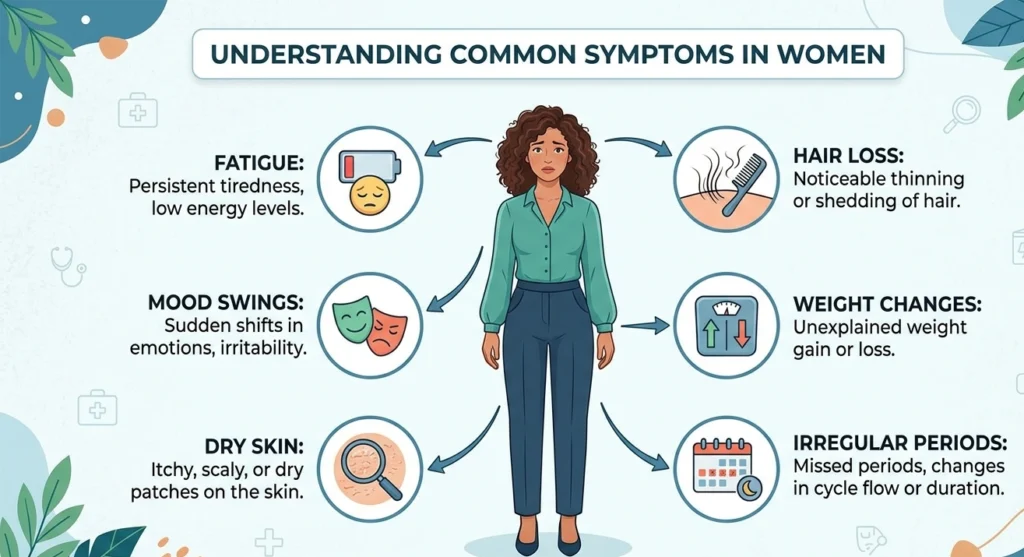
- Unexplained weight changes, weight gain despite no change in diet (hypothyroid) or unexplained weight loss with increased appetite (hyperthyroid). Both are signals worth investigating.
- Persistent fatigue, not the tired that sleep fixes. A heavy, dragging exhaustion that stays even after a full night’s rest.
- Hair thinning or excessive hair fall, diffuse shedding across the scalp, sometimes including eyebrow thinning at the outer edges. A specific marker many doctors check for.
- Irregular or heavy periods, the thyroid and reproductive hormones are tightly linked. Cycle disruption is one of the most common and overlooked thyroid symptoms in women.
- Cold intolerance, feeling cold when others are comfortable. Hands and feet that are perpetually cold.
- Mood changes, unexplained low mood, anxiety, irritability, or emotional flatness that doesn’t have a clear external cause.
- Brain fog, difficulty concentrating, slow recall, feeling mentally sluggish even early in the day.
- Dry skin and brittle nails, skin that loses moisture fast, nails that split easily.
- Constipation or sluggish digestion, a slowed metabolism slows everything, including the gut.
- Muscle weakness or joint aches, a generalized heaviness in the limbs, stiffness, or aches that seem to move around.
- Neck swelling or difficulty swallowing, visible enlargement at the base of the throat (goiter), sometimes accompanied by a sensation of something sitting in the throat.
Not every woman will have all eleven. Some have three or four. The presence of multiple symptoms together is what matters.
What Are the Early Warning Signs of Thyroid Problems in Females?
Early thyroid symptoms in women are subtle enough that most women explain them away for months, sometimes years, before a diagnosis is made.
The earliest signals are almost always in the energy and mood category. Fatigue that feels different from normal tiredness. A heaviness in the morning that doesn’t lift. Mood that feels inexplicably flat or anxious without external reason. These don’t scream “thyroid.” They whisper, and they get attributed to everything else first.
What to watch for in the early stages:
- A subtle but persistent weight shift (up or down) with no lifestyle change
- Hair becoming noticeably finer, or falling more than usual when washing or combing
- Menstrual cycles becoming slightly shorter, longer, heavier, or irregular
- A low-grade sensitivity to cold, particularly in the hands and feet
- Concentration that feels effortful, taking longer to finish familiar tasks
What makes early thyroid symptoms in women tricky is that they closely resemble the symptoms of stress, anaemia, PCOS, and vitamin deficiencies. This overlap causes delayed diagnosis regularly. If you’re experiencing three or more of the above consistently, it’s worth checking your TSH, T3, and T4 levels, not just ruling it out.
Dr. Bhisham Tiwari has observed that many women who come to Nature Hospital with thyroid concerns have been living with these symptoms for 1–2 years before any investigation. The body gave signals early. Life was busy.
What Happens If You Ignore Your Thyroid?
This is worth sitting with seriously. Untreated thyroid conditions don’t stay mild, they compound.
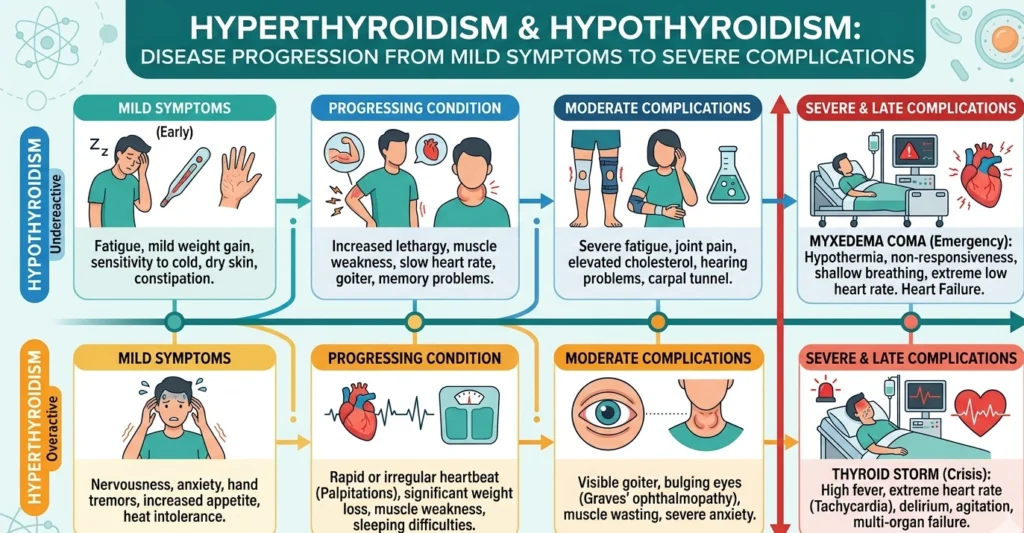
An underactive thyroid left untreated can progress toward:
- Worsening fatigue, depression, and cognitive slowing
- Significant weight gain that becomes increasingly difficult to reverse
- Elevated cholesterol and increased cardiovascular risk
- Infertility or recurrent miscarriage, the thyroid-fertility link is well established
- In rare but serious cases, myxedema coma, a life-threatening condition from severe, prolonged hypothyroidism
An overactive thyroid left untreated carries different risks:
- Rapid, sustained weight loss and muscle wasting
- Heart palpitations and irregular heartbeat (atrial fibrillation)
- Severe anxiety and sleep disruption
- Bone density loss leading to early osteoporosis, a particular concern for women
The point isn’t to create fear. It’s to underline that thyroid symptoms in women are not something to manage with patience and hope. The thyroid governs too many systems for a prolonged imbalance to stay contained.
Catching it early, and treating it consistently, makes a substantial difference to the severity of long-term impact. This is true whether the treatment path is conventional, Ayurvedic, or both.
How Ayurveda Approaches Thyroid Symptoms in Women
Ayurveda sees thyroid imbalance as a disruption of Kapha and Vata, most commonly seen in hypothyroidism, with Pitta involvement in hyperthyroid cases. What this means practically is that treatment doesn’t focus only on the gland. It addresses the whole hormonal environment.
Key elements of an Ayurvedic approach to thyroid symptoms in women at Nature Hospital:
- Kanchanar Guggul
One of the most specific Ayurvedic formulations for thyroid disorders. Supports the lymphatic and endocrine system directly, helps reduce goitre, and assists in normalizing TSH levels over time with consistent use. - Ashwagandha
Supports both the thyroid and the adrenal system. Particularly useful in stress-driven thyroid disruption, which is extremely common in women. - Triphala and digestive support
Since sluggish digestion is both a symptom and a driver of hypothyroid conditions, gut health is addressed alongside the thyroid. - Dietary corrections
Dietary corrections: reduce goitrogenic foods (raw cruciferous vegetables, excessive soy) during active treatment; increase iodine-rich, warming foods. - Lifestyle regulation, consistent sleep times, reduced exposure to environmental toxins, and stress management practices that directly support hormonal balance.
What Ayurveda offers here that conventional treatment sometimes doesn’t is attention to the whole endocrine picture, not just the thyroid in isolation. Hormones talk to each other. Treating one without looking at the others often produces incomplete results.
Conclusion
Thyroid symptoms in women are easy to explain away, one by one. But when you look at the pattern, the fatigue, the weight shift, the mood, the hair, the cycle changes, the body has usually been communicating clearly for a while.
The thyroid is not a small issue to monitor quietly. It’s a central regulator of how you function every day. And when it’s off, consistently and over time, the effects reach further than most people expect.
Listen to what the body is saying. Get tested. And if something comes back abnormal, or if the symptoms persist even with normal levels, it may be time to look at the whole picture, not just the numbers.
Struggling with Thyroid Symptoms? Nature Hospital Can Help
If you’ve been experiencing thyroid symptoms in women and want a treatment approach that goes beyond just managing TSH numbers, Nature Hospital’s Ayurvedic Thyroid Management program addresses the root hormonal imbalance, with a personalized plan built around your specific condition, body type, and lifestyle.
Frequently Asked Questions
Q1: What are 10 warning signs of thyroid?
The most common warning signs include fatigue, unexplained weight change, hair thinning, cold intolerance, mood changes, dry skin, brain fog, constipation, irregular periods, and neck swelling. If you have 3 or more of these consistently, a thyroid panel, TSH, T3, T4, is worth getting done.
Q2: What are the 20 signs you have a thyroid problem?
Beyond the core ten, additional signs include brittle nails, puffy face (especially around the eyes in the morning), low libido, slow heart rate, muscle cramps, hoarse voice, elevated cholesterol, poor wound healing, infertility, and increased sensitivity to medications. The wider the spread of symptoms across body systems, the stronger the case for thyroid investigation.
Q3: Can thyroid problems affect fertility in women?
Yes, significantly. The thyroid regulates reproductive hormones directly. Both hypothyroidism and hyperthyroidism are linked to irregular cycles, difficulty conceiving, and increased risk of miscarriage. Thyroid screening is now routinely recommended for women experiencing fertility challenges.
Q4: Can Ayurveda help normalize thyroid levels?
Ayurvedic treatment, particularly Kanchanar Guggul, Ashwagandha, and dietary corrections, has shown measurable benefit in managing thyroid symptoms in women, especially in hypothyroid cases. It works best as a consistent, sustained protocol, not a short course.
Q5: Does stress worsen thyroid symptoms in women?
Directly, yes. Chronic stress elevates cortisol, which interferes with thyroid hormone conversion and suppresses TSH regulation. Many women find that thyroid levels fluctuate with periods of high stress, which is why stress management is always part of effective thyroid care.
Q6: How long does Ayurvedic thyroid treatment take to show results?
Most patients notice improvement in energy, mood, and hair quality within 6–10 weeks of consistent Ayurvedic care. TSH normalization, where it occurs, typically takes 3–6 months. Dr. Bhisham Tiwari’s approach at Nature Hospital involves regular follow-ups to track progress and adjust the protocol as the body responds.