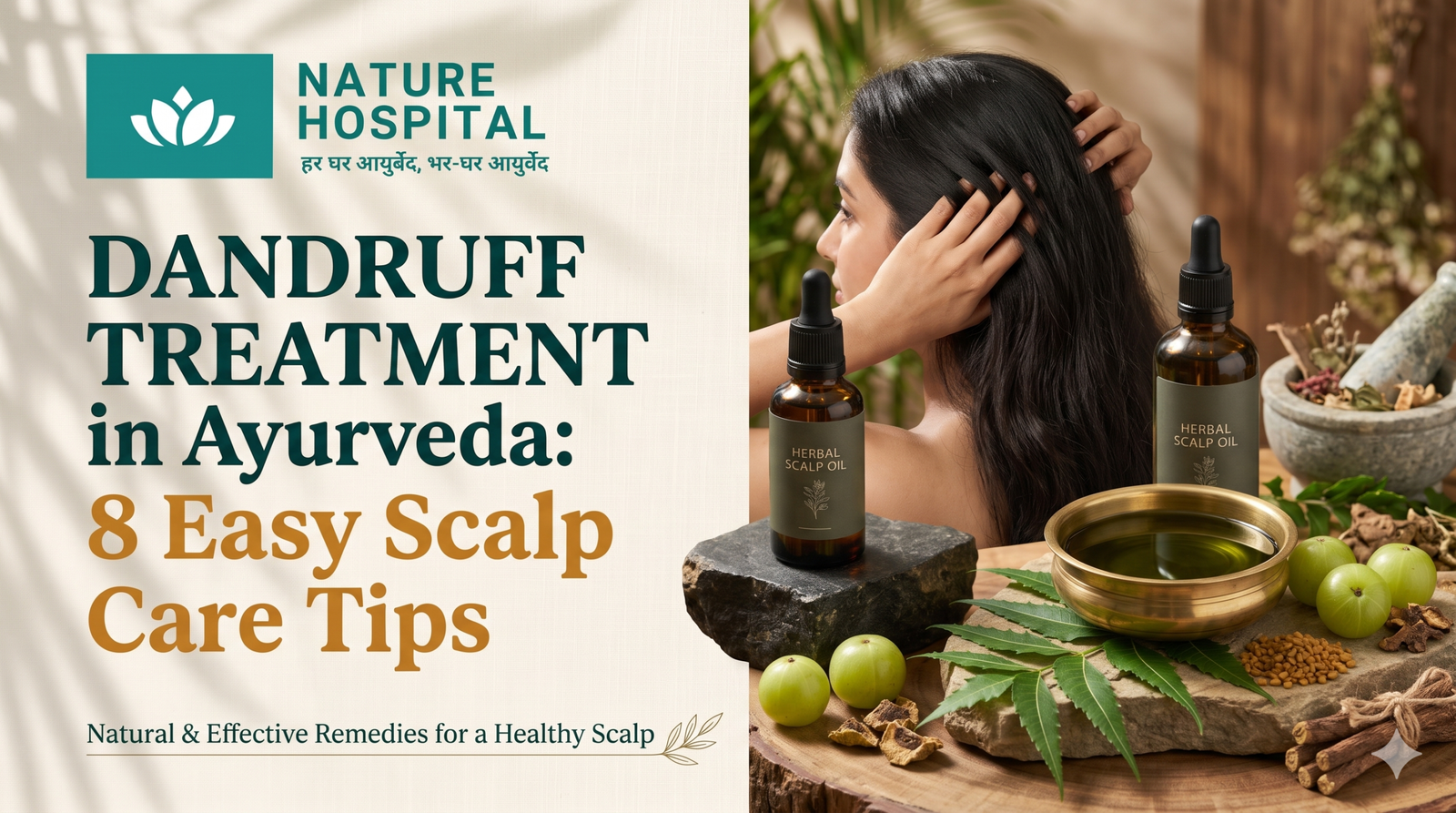
White flakes on your shoulders, an itchy scalp and the embarrassment of constant scratching make dandruff a daily annoyance. It is common, harmless in most cases, and can usually be controlled. This guide explains dandruff treatment in Ayurveda along with simple scalp care steps.
You will learn what dandruff is, why it occurs, how Ayurveda describes it as Darunaka and Rusi, 8 easy scalp care tips, a diet that helps, safe herbal options and when to see a doctor.
What Is Dandruff?
Dandruff is the shedding of dry or oily flakes of skin from the scalp, often with itching. It is not contagious. A mild form is simple dandruff, and a more inflamed form is called seborrhoeic dermatitis, which causes redness and greasy yellow scales.
Table of Contents
- What Is Dandruff?
- Causes of Dandruff
- The Ayurvedic View: Darunaka and Rusi
- 8 Easy Scalp Care Tips for Dandruff Treatment in Ayurveda
- Diet for a Healthy Scalp
- Herbal Oils and Ingredients Commonly Used
- Dandruff and Hair Fall
- Building a Weekly Routine for Dandruff Treatment in Ayurveda
- When to See a Doctor
- Frequently Asked Questions (FAQ)
- Key Takeaways
- Consult Dr. Bhisham Tiwari at Nature Hospital, Hisar
- Trusted External Resources
Causes of Dandruff
- A yeast-like fungus called Malassezia that lives on most scalps and may overgrow.
- Oily scalp, or on the other hand dry skin, especially in winter.
- Infrequent washing, which allows oil and dead skin to build up.
- Stress, poor sleep and hormonal changes.
- Reaction to hair products, dyes or hard water.
- Skin conditions such as eczema, psoriasis, and some health problems.
- Excess sugary, oily and junk food in some people.
The Ayurvedic View: Darunaka and Rusi
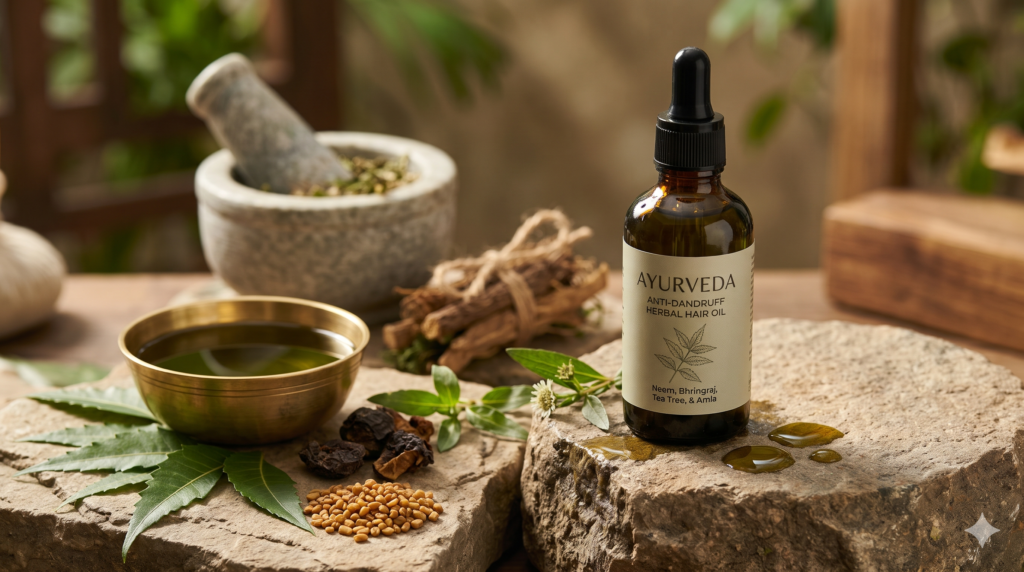
In Ayurveda, dandruff is called Darunaka or Rusi. It is linked with aggravated vata (dryness), pitta (heat) and kapha (oiliness), along with poor digestion and unclean scalp. Stress, irregular routine, hot and spicy food and harsh hair products are said to worsen the problem.
Dandruff treatment in Ayurveda therefore combines scalp cleansing, herbal oils and washes, a cooling diet and stress control.
8 Easy Scalp Care Tips for Dandruff Treatment in Ayurveda
Tip 1: Wash your hair regularly
Wash two to three times a week with a mild shampoo. Do not leave oil on the scalp for days. Oil left too long can feed the fungus and worsen flakes.
Tip 2: Oil lightly and wash after one to two hours
Massage the scalp gently with coconut oil, or with a herbal oil advised by your vaidya, for a few minutes. Wash off after one to two hours, not overnight.
Tip 3: Use neem
Neem is traditionally used for itchy, flaky scalps. Boil a handful of neem leaves in water, cool, and use as a final rinse. Test on a small area first.
Tip 4: Use fenugreek (methi) paste
Soak methi seeds overnight, grind to a paste, apply for 20 to 30 minutes and rinse. It is a widely used home remedy.
Tip 5: Try amla, reetha and shikakai
These traditional cleansers are used as gentle hair washes. Rinse well to avoid residue.
Tip 6: Avoid very hot water and harsh products
Use lukewarm water. Limit heat styling, strong dyes and products with many chemicals.
Tip 7: Keep combs and towels clean
Wash combs weekly and use your own towel.
Tip 8: Manage stress and sleep
Practise pranayama and sleep 7 to 8 hours. Stress often worsens flaking.
Diet for a Healthy Scalp
- Eat more fruits, vegetables, nuts, seeds and whole grains.
- Include zinc and omega-3 sources such as pumpkin seeds, walnuts and flaxseed.
- Include curd or buttermilk as suited to you, for healthy gut bacteria.
- Drink enough water.
- Limit sugar, fried food, junk food, alcohol and excess spice.
A balanced diet also protects against hair fall. See our guide on hair fall treatment in Ayurveda.
Herbal Oils and Ingredients Commonly Used
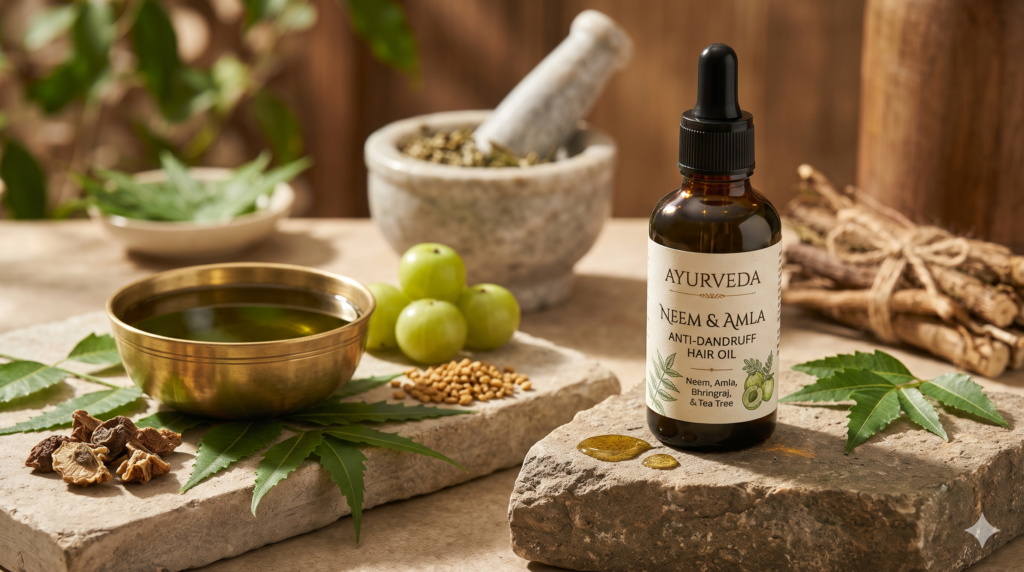
Coconut oil, Bhringraj oil, Neem oil, Brahmi oil, Amla and Tea tree oil (diluted) are popular. Evidence is limited for several of them, and some people react to oils or essential oils. Do a patch test on the skin behind the ear. Do not use undiluted essential oil on the scalp.
Dandruff and Hair Fall
Dandruff itself does not usually cause permanent hair loss, but heavy scratching and inflamed skin can increase shedding. If hair fall is more serious, check for thyroid, iron and vitamin problems. Our thyroid diet article and our hair loss treatment page give more guidance.
Building a Weekly Routine for Dandruff Treatment in Ayurveda
Consistency decides success. A simple weekly plan for dandruff treatment in Ayurveda is: oil once, wash two or three times, use a neem rinse once, and a methi pack once. Follow this dandruff treatment in Ayurveda routine for four weeks and note the change. Adjust the plan with your doctor if your scalp turns red or sore.
When to See a Doctor
- Severe itching, redness, painful sores or oozing.
- Thick yellow crusts, or patches of hair loss.
- Flaking on eyebrows, face or ears, which may be seborrhoeic dermatitis.
- No improvement after four weeks of regular care.
- Suspected psoriasis or fungal infection.
A doctor may advise medicated shampoos, which are very effective for stubborn cases.
Frequently Asked Questions (FAQ)
Can dandruff treatment in Ayurveda remove dandruff permanently?
Dandruff tends to return if care stops. Dandruff treatment in Ayurveda helps control it through regular scalp hygiene, diet and stress management.
How often should I oil my hair during dandruff treatment in Ayurveda?
Once or twice a week for one to two hours before washing is enough for most people.
Does lemon juice help?
It may irritate the scalp. If used, dilute well and test first.
Is dandruff caused by dry scalp only?
No. Oily scalp and fungus overgrowth are also common causes.
Does stress affect dandruff treatment in Ayurveda?
Stress can worsen it.
Key Takeaways
- Dandruff is common, harmless and controllable.
- Dandruff treatment in Ayurveda uses regular washing, light oiling, neem, methi and a balanced diet.
- Avoid leaving oil on overnight, and avoid harsh products.
- See a doctor for severe or non-healing scalp problems.
Consult Dr. Bhisham Tiwari at Nature Hospital, Hisar
If you are dealing with dandruff or scalp problems, you do not have to manage it alone. At Nature Hospital, Dr. Bhisham Tiwari (Ayurvedacharya) offers confidential consultations in the clinic and online. After a detailed assessment, including Nadi Parikshan, a personalised plan covering medicines, diet and lifestyle is suggested. You can book a consultation today. The online consultation fee is Rs. 200 and is adjustable against a complete treatment package.
- Address: 32, Rama Complex, Parijat Chowk, Hisar, Haryana 125001
- Phone / WhatsApp: +91 98126 95495
- Timings: Monday to Saturday, 9:00 am to 7:00 pm (Sunday closed)
Trusted External Resources
Disclaimer: This article is for general information and education only. It is not a substitute for professional medical advice, diagnosis or treatment. Always consult a qualified doctor for your specific condition, and do not stop or change any prescribed medicine without medical advice. Individual results may vary.