Irregular periods, acne, unwanted hair growth, weight gain and thinning hair can make life stressful for many women with PCOS. Polycystic ovary syndrome is a hormonal condition, and it is best managed by changing habits along with medical guidance. This guide explains PCOS Ayurvedic treatment in clear language.
You will learn what PCOS is, its symptoms and causes, how Ayurveda explains it, 10 effective lifestyle tips, a PCOS diet, yoga suggestions and when to see a doctor. PCOD and PCOS are often used together in daily talk, and this article covers both.
What Is PCOS?
PCOS is a common hormonal condition in women of reproductive age. It is usually marked by irregular or missed periods, higher levels of male hormones (androgens), and sometimes many small follicles seen on the ovaries on ultrasound. A diagnosis needs a doctor’s evaluation, because other conditions like thyroid disease can look similar.
Table of Contents
- What Is PCOS?
- Symptoms of PCOS
- Causes and Risk Factors
- The Ayurvedic View of PCOS
- 10 Effective Lifestyle Tips for PCOS Ayurvedic Treatment
- PCOS Diet in Ayurveda
- Yoga for PCOS
- Herbs Used in Ayurveda for PCOS
- PCOS and Fertility
- How Long Does PCOS Ayurvedic Treatment Take?
- When to See a Doctor
- Frequently Asked Questions (FAQ)
- Key Takeaways
- Consult Dr. Bhisham Tiwari at Nature Hospital, Hisar
- Trusted External Resources
Symptoms of PCOS
- Irregular, infrequent or absent periods.
- Acne, oily skin and unwanted facial or body hair.
- Hair thinning or hair fall from the scalp. See our guide on hair fall treatment in Ayurveda.
- Weight gain, especially around the abdomen.
- Dark patches on the neck or underarms.
- Difficulty in getting pregnant.
- Mood changes, anxiety and poor sleep.
Causes and Risk Factors
The exact cause is not known. Insulin resistance, where the body does not respond well to insulin, is common and pushes the ovaries to make more androgens. Genetics, obesity, inactivity, stress and poor sleep also play a part. Thyroid problems can overlap, so a check is wise. Read our thyroid diet guide for more details.
The Ayurvedic View of PCOS
Ayurveda does not name PCOS exactly, but it is compared with conditions such as Artava Kshaya, Nashtartava, and Pushpaghni Jataharini, where menstruation is disturbed. The picture involves kapha and vata imbalance, weak digestion (mandagni), accumulation of toxins (ama) and blocked channels (srotorodha), along with an excess of fat tissue (meda dhatu).
PCOS Ayurvedic treatment therefore aims to improve digestion and metabolism, balance the doshas and restore regular cycles, through diet, routine, yoga and, when needed, herbs prescribed by a doctor.
10 Effective Lifestyle Tips for PCOS Ayurvedic Treatment
1. Aim for gradual weight loss
Losing even 5 to 10 percent of body weight can improve periods and hormones for many women. Our Ayurvedic daily routine for weight loss gives a simple start.
2. Exercise 45 minutes most days
Brisk walking, cycling, swimming, dance, strength training and yoga improve insulin response.
3. Choose low glycaemic foods
Prefer whole grains, millets, pulses and vegetables over white rice, maida, sugar and sweets.
4. Eat protein at every meal
Dal, sprouts, paneer, curd, eggs, fish and nuts keep you full and steady your blood sugar.
5. Do not skip meals
Regular meal timings support digestion and insulin balance.
6. Reduce sugar and junk food
Sweet drinks, bakery items, fried snacks and packaged foods worsen insulin resistance.
7. Sleep 7 to 8 hours
Poor sleep raises stress hormones and appetite. Sleep by 10:30 pm.
8. Manage stress
Practise pranayama, meditation and enjoyable activities. Stress can worsen hormones and cravings.
9. Keep a period diary
Note dates, flow and symptoms. It helps your doctor track progress.
10. Follow up regularly
PCOS is long-term. Regular check-ups of weight, blood sugar, thyroid and cycles are important.
PCOS Diet in Ayurveda
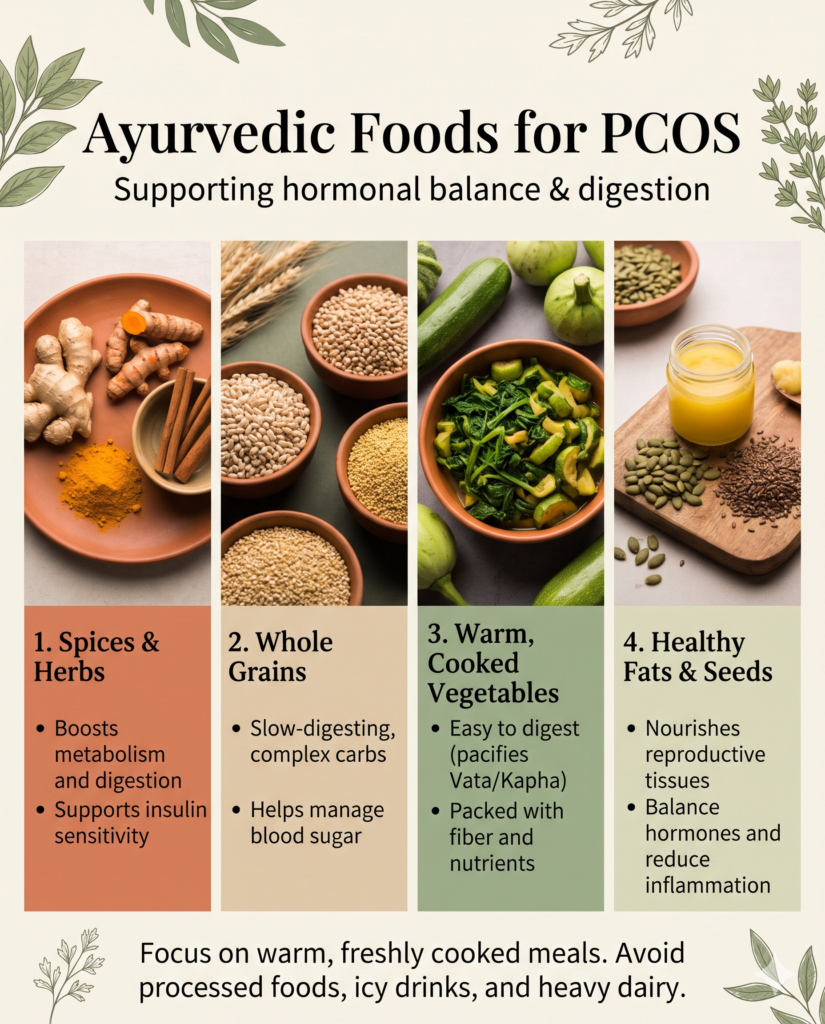
Ayurveda advises light, warm, freshly cooked food that reduces kapha, with spices that support digestion.
- Include: jowar, bajra, ragi, oats, brown rice in small portions, moong dal, chana, rajma, lauki, tori, bitter gourd, spinach, fenugreek (methi), cinnamon, ginger, turmeric, cumin, flaxseed and nuts.
- Include fruits like guava, apple, pear, jamun and berries in moderate amounts.
- Limit: sugar, sweets, maida, white bread, cold drinks, fried food, packaged snacks and excess dairy sweets.
- Drink warm water, jeera water, buttermilk and herbal teas without sugar.
Eat the heaviest meal at lunch, and a light dinner by 7:30 pm.
Yoga for PCOS
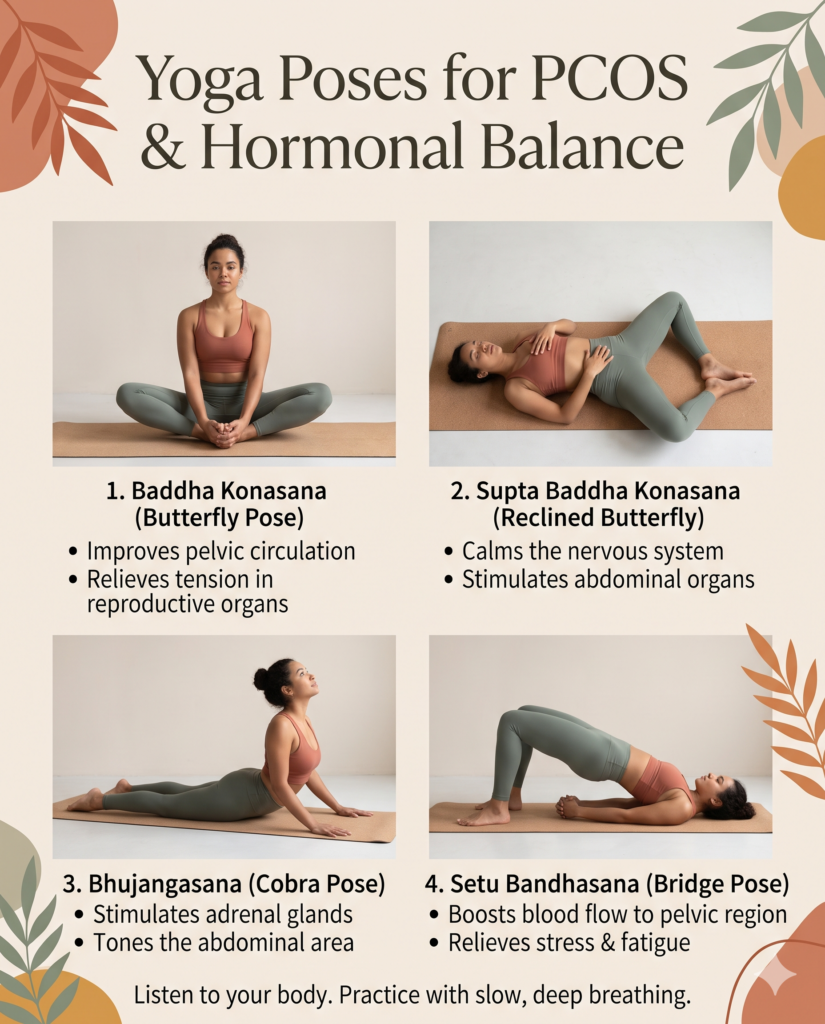
- Surya Namaskar for overall metabolism.
- Baddha Konasana, Bhujangasana, Dhanurasana and Setu Bandhasana for the pelvic region.
- Anulom Vilom and Kapalbhati (only if suitable) for stress and metabolism.
- Avoid forceful practices during periods or pregnancy unless advised.
Herbs Used in Ayurveda for PCOS
Shatavari, Ashoka, Lodhra, Guduchi, Kanchanar and Triphala are traditionally used. Some studies on herbs like cinnamon or fenugreek suggest benefits for blood sugar, but evidence in PCOS is limited. Do not self-medicate, especially if you are trying to conceive, pregnant, or on other medicines.
PCOS and Fertility
PCOS can delay ovulation, but many women conceive with proper care. If you have been trying for 12 months (6 months if above 35), see a doctor. Weight, sleep, diet and stress affect fertility for both partners.
How Long Does PCOS Ayurvedic Treatment Take?
PCOS is a long-term condition, so patience is essential. Many women notice better energy and clearer skin within weeks, but periods may take three to six months to settle. PCOS Ayurvedic treatment works best when it is followed along with exercise, sleep and food habits. A good PCOS Ayurvedic treatment plan is reviewed every month or two, and it should always be coordinated with your gynaecologist.
When to See a Doctor
- No periods for three months or very irregular cycles.
- Heavy bleeding, severe pain or sudden hair growth and deepening voice.
- Rapid weight gain, extreme thirst or frequent urination, which may point to diabetes.
- Trouble conceiving.
- Low mood or anxiety.
Frequently Asked Questions (FAQ)
Can PCOS Ayurvedic treatment cure PCOS?
PCOS is a long-term condition that can be managed. Ayurvedic care and lifestyle change help many women improve cycles and symptoms, but results vary and follow-up is needed.
Is PCOD the same as PCOS?
They are often used for the same condition, though doctors may use the terms differently.
Can I get pregnant during PCOS Ayurvedic treatment?
Yes, many women do, sometimes with medical support.
What should I avoid eating during PCOS Ayurvedic treatment?
Sugar, maida, sweet drinks, deep-fried and packaged food.
How long until PCOS Ayurvedic treatment makes periods regular?
Usually a few months of steady habits. Be patient.
Key Takeaways
- PCOS is a hormonal condition linked with insulin resistance.
- PCOS Ayurvedic treatment uses diet, exercise, sleep, stress control and supervised herbs.
- Even modest weight loss helps cycles.
- Regular follow-up with a doctor is important.
Consult Dr. Bhisham Tiwari at Nature Hospital, Hisar
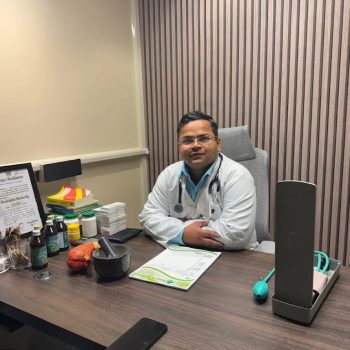
If you are dealing with PCOS, you do not have to manage it alone. At Nature Hospital, Dr. Bhisham Tiwari (Ayurvedacharya) offers confidential consultations in the clinic and online. After a detailed assessment, including Nadi Parikshan, a personalised plan covering medicines, diet and lifestyle is suggested. You can book a consultation today. The online consultation fee is Rs. 200 and is adjustable against a complete treatment package.
- Address: 32, Rama Complex, Parijat Chowk, Hisar, Haryana 125001
- Phone / WhatsApp: +91 98126 95495
- Timings: Monday to Saturday, 9:00 am to 7:00 pm (Sunday closed)
Trusted External Resources
Disclaimer: This article is for general information and education only. It is not a substitute for professional medical advice, diagnosis or treatment. Always consult a qualified doctor for your specific condition, and do not stop or change any prescribed medicine without medical advice. Individual results may vary.