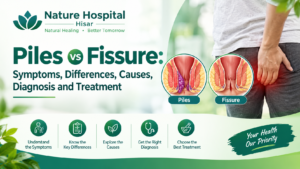
Understand the difference between bawasir (haemorrhoids) and anal fissure, recognise warning signs and learn when to seek medical care.
Table of Contents
- Quick answer: piles vs fissure
- What are piles (haemorrhoids or bawasir)?
- What is an anal fissure?
- Piles vs fissure: detailed comparison
- A comparison table for quick understanding
- Why piles and fissures develop
- Symptoms that should not be ignored
- How doctors diagnose piles and fissures
- Home care and daily habits
- Diet for piles and fissure
- Medical treatment for piles
- Medical treatment for anal fissure
- The Ayurvedic approach: informed and individualised care
- Can piles and fissure occur together?
- Special situations: pregnancy, older adults and children
- Common myths about piles and fissures
- When should you book a consultation?
- Consult Dr. Bhisham Tiwari at Nature Hospital, Hisar
- Frequently asked questions
- References and further reading
- Medical disclaimer
Quick answer: piles vs fissure
Piles and anal fissures are two different conditions that can cause pain, irritation and bleeding around the anus. Piles, also called haemorrhoids or bawasir, are swollen vascular cushions in and around the anal canal. An anal fissure is a small tear in the delicate lining of the anal canal. The symptoms can overlap, so it is not safe to diagnose either condition from bleeding alone.
A useful pattern is that uncomplicated internal piles may cause bright-red bleeding without much pain, while a fissure often causes sharp, cutting or burning pain during a bowel movement and pain that continues afterwards. External piles can be painful, particularly when a clot forms. These patterns are clues, not a diagnosis. A clinician may need to inspect the area and, depending on symptoms and age, investigate other causes of bleeding.
The most important first step is to avoid straining and keep stools soft. Adequate fluids, fibre-rich food, regular movement and sensible toilet habits can help reduce irritation in both conditions. Warm sitz baths may soothe discomfort. Persistent, recurrent or unexplained bleeding should be assessed by a qualified healthcare professional rather than repeatedly treated at home.
What are piles (haemorrhoids or bawasir)?
Piles, medically known as haemorrhoids, are enlarged or symptomatic vascular cushions in the anal canal. Everyone has normal anal cushions that help with continence. They become a problem when the supporting tissue stretches, the cushions enlarge or they prolapse and cause symptoms. Piles may be internal, external or a combination of both.
Internal piles develop inside the anal canal. They are commonly described by grades according to how far they prolapse. Grade I piles do not prolapse outside. Grade II piles come out during a bowel movement but go back in on their own. Grade III piles need to be pushed back inside. Grade IV piles remain outside and cannot be reduced. A clinician determines the grade; it is not possible to grade piles reliably from symptoms alone.
External piles occur beneath the skin around the anal opening. They may cause a tender lump, swelling, irritation or difficulty cleaning the area. If a clot forms in an external haemorrhoid, it may become suddenly very painful and firm. This is sometimes called a thrombosed external haemorrhoid and deserves prompt medical advice, especially when pain is severe.
Symptoms vary. Some people notice painless bright-red blood on toilet paper or in the toilet bowl. Others experience itching, mucus, a feeling that stool has not completely passed, swelling or tissue that protrudes during bowel movements. Not every anal lump is a pile, and not every episode of rectal bleeding is caused by haemorrhoids.
Common contributing factors include constipation, repeated straining, spending a long time on the toilet, low dietary fibre, pregnancy, ageing and persistent diarrhoea. Heavy lifting may increase pressure in some circumstances, but piles usually have more than one contributing factor. The goal of care is to relieve symptoms, improve bowel habits and choose a procedure only when it is appropriate.
What is an anal fissure?
An anal fissure is a linear split or tear in the anoderm, the sensitive lining near the anal opening. It is often triggered when a hard or large stool stretches the anal canal. Repeated diarrhoea and local trauma can also contribute. In Ayurveda, a fissure is commonly discussed in relation to Parikartika; this traditional term should not replace a modern clinical assessment.
The typical symptom is intense pain while passing stool, often described as a cut, tear, glass-like pain or burning sensation. Pain may continue for minutes or hours after the bowel movement. A small amount of bright-red blood may appear on toilet paper or as a streak on the outside of stool. Some people begin delaying bowel movements because they fear the pain, which can make constipation worse and create a cycle.
Many fissures occur in the front or back midline of the anal canal. A fissure away from the midline, multiple fissures, an unusually deep ulcer or a wound that does not heal may need further investigation. Conditions such as Crohn’s disease, infections and other disorders can sometimes produce fissure-like symptoms. A clinician should assess atypical or persistent symptoms.
An acute fissure is generally a recent tear. A chronic fissure has persisted and may show features such as thickened edges, a sentinel skin tag or a visible muscle fibre at its base. Definitions of duration vary slightly between clinical references, so the treating clinician should interpret the timeline alongside the examination. Chronic fissures may need prescription treatment or a specialist procedure.
Piles vs fissure: detailed comparison
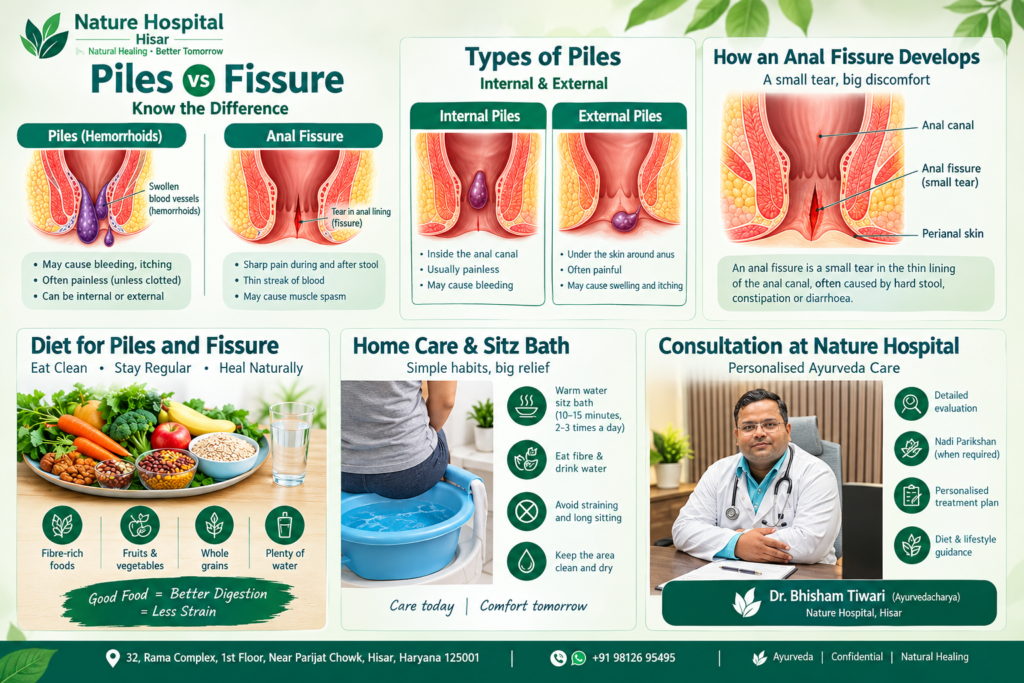
| Feature | Piles (haemorrhoids) | Anal fissure |
|---|---|---|
| What it is | Enlarged or displaced vascular cushions | A tear in the anal lining |
| Pain | Internal piles may be painless; external or complicated piles can hurt | Often sharp pain during and after passing stool |
| Bleeding | May be bright red and noticed on tissue, stool or in the bowl | Often a small bright-red streak, frequently with pain |
| Lump | May cause a lump or prolapsing tissue | May have a small skin tag when chronic; usually no large lump |
| Common contributors | Straining, constipation, pregnancy and pressure | Hard stool, repeated trauma and sometimes diarrhoea |
| Care | Bowel-habit changes, medicines, office procedures or surgery in selected cases | Stool-softening measures, topical prescription treatment and procedures in selected chronic cases |
Pain pattern: internal piles often bleed without sharp pain, unless they prolapse, become trapped or develop complications. External piles can be tender. A fissure more characteristically causes sharp pain during stool and lingering pain afterwards. Pain alone cannot confirm the cause because abscesses, skin disease and other conditions can also be painful.
Bleeding pattern: both conditions can cause fresh red blood. With piles, blood may be noticed on tissue, on the stool surface or dripping into the toilet. With a fissure, bleeding is often a small streak on tissue or stool and is associated with pain. The amount and appearance of blood are not reliable enough to rule out more serious causes.
Lump or swelling: a prolapsing internal pile or an external pile may be felt as a lump. A chronic fissure can have a small skin tag near the tear, but a large protruding mass is not the usual presentation of an uncomplicated fissure. A new, hard, growing or persistent lump needs examination.
Itching and mucus: itching, moisture and mucus discharge can occur with piles, particularly when tissue prolapses. They can also arise from irritation, infection, skin conditions or leakage. A fissure may cause local irritation, but severe pain with bowel movements is usually the more distinctive clue.
Muscle spasm: fissures can be associated with tightening of the internal anal sphincter. Spasm can reduce local blood flow and contribute to pain and delayed healing. Piles are not defined by this fissure-related pain-spasm cycle, although pain and swelling from complicated piles can also make the area feel tense.
Underlying problem: piles involve enlarged or displaced vascular cushions and their supporting tissue. A fissure is a break in the anal lining. Both can be encouraged by constipation and straining, and both may occur in the same person. Treatment is therefore based on the actual diagnosis, not on a single symptom or a home remedy.
A comparison table for quick understanding
Use this table as an educational guide only. It summarises common patterns; it cannot determine which condition an individual has. A doctor may recommend an external inspection, a gentle rectal examination, anoscopy or other tests depending on the symptoms and whether an examination is comfortable and appropriate.
Why piles and fissures develop
Constipation is a common shared contributor. When stool is hard or dry, passing it may require more effort and repeated straining. This can aggravate haemorrhoidal cushions and can stretch or injure the anal lining. Constipation may be associated with low fibre intake, inadequate fluid intake, changes in routine, limited activity, some medicines or underlying health conditions.
Diarrhoea can also irritate the anal area. Frequent bowel movements and repeated wiping may inflame the skin, while loose stools can contribute to fissure development in some people. The aim is not simply to make stools as soft as possible; it is to achieve a comfortable, formed stool that passes without straining.
Long toilet sessions can encourage straining and increase pressure around the anal canal. Using a phone while sitting on the toilet may unintentionally extend the time spent there. Respond to the natural urge to pass stool, avoid forceful pushing and leave the toilet when the bowel movement is complete.
Pregnancy and childbirth can increase pressure in the pelvic and rectal veins and may change bowel habits. Hormonal changes, reduced activity, iron supplements and pressure from the growing uterus can contribute to constipation. A pregnant or breastfeeding person should discuss medicines, creams and laxatives with their obstetric clinician before using them.
Ageing and changes in connective tissue can affect the support around haemorrhoidal cushions. Repeated constipation, chronic diarrhoea, obesity and sedentary routines may also contribute. These factors increase risk; they do not mean a person will inevitably develop piles or fissures.
Some people have recurrent symptoms despite making sensible lifestyle changes. This may happen because the original diagnosis was incomplete, a fissure has become chronic, piles are prolapsing, a medicine is contributing to constipation, or another bowel condition is present. Recurrent symptoms are a reason to review the diagnosis and plan rather than simply repeating the same treatment.
Symptoms that should not be ignored
Seek urgent medical attention for heavy or continuous rectal bleeding, fainting, marked dizziness, weakness, severe abdominal pain, black tarry stools or signs of significant blood loss. If bleeding is accompanied by fever, chills, worsening swelling, pus or rapidly increasing pain, urgent assessment is important because an abscess or infection may be present.
Arrange a prompt medical review for repeated bleeding, unexplained weight loss, a persistent change in bowel habits, a new lump, anaemia, fatigue, mucus or pus discharge, or pain that is getting worse. A family history of colorectal cancer, inflammatory bowel disease or other bowel disorders should be mentioned to the clinician.
Do not assume that blood is from piles simply because you have had piles before. Rectal bleeding can have several causes, including fissure, haemorrhoids, inflammatory bowel disease, polyps and colorectal cancer. The appropriate evaluation depends on age, medical history, risk factors and the pattern of symptoms.
If you are taking blood-thinning medicines or have a bleeding disorder, report any rectal bleeding promptly and tell the clinician which medicines you use. Do not stop prescribed anticoagulants or antiplatelet medicines on your own. A healthcare professional can balance the bleeding concern with the reason the medicine was prescribed.
How doctors diagnose piles and fissures
Diagnosis begins with a history. The clinician may ask when symptoms started, whether pain occurs during or after a bowel movement, how much bleeding is present, whether a lump comes out, whether constipation or diarrhoea is common, and whether there are symptoms such as fever, abdominal pain or weight loss. Information about medicines, pregnancy, previous procedures and family history can also matter.
An external inspection may identify an external haemorrhoid, prolapse, skin irritation, a visible fissure, a skin tag, swelling or discharge. The clinician should explain the examination and obtain consent. If pain is severe, an internal examination may need to be delayed, modified or performed by a specialist in an appropriate setting.
A digital rectal examination may help assess the anal canal and rectum, but it is not always appropriate when an acute fissure causes severe pain. Anoscopy is a short examination using a small instrument to view the anal canal and can help identify internal piles or other abnormalities. The clinician decides which examination is suitable.
Further tests are not required for every person. Depending on the history and examination, a clinician may recommend blood tests, stool tests, sigmoidoscopy or colonoscopy to investigate bleeding or changes in bowel habits. Screening recommendations and the threshold for investigation vary by age, risk and local guidance. Never delay an advised test because you believe symptoms are only piles.
Home care and daily habits
Increase fibre gradually. Include vegetables, fruits, pulses, oats, whole grains, nuts and seeds as tolerated. A sudden large increase can cause gas or bloating, so build intake over time and drink enough fluid. People with bowel narrowing, swallowing difficulty or certain medical conditions should ask a clinician before taking fibre supplements.
Drink fluids regularly throughout the day, unless a clinician has advised a fluid restriction for heart, kidney or another medical condition. Water is a practical choice. There is no single water target that suits everyone; needs vary with body size, climate, activity, pregnancy and health status.
Do not ignore the urge to pass stool. Try to establish a relaxed routine, often after breakfast or another meal when the bowel is naturally more active. Avoid forceful pushing. A small footstool may help some people adopt a comfortable position, but it should not cause straining or discomfort.
Warm sitz baths may soothe anal discomfort. Sit in comfortably warm, not hot, clean water for around 10 to 15 minutes, especially after bowel movements if it helps. Avoid adding antiseptics, perfumed products or harsh substances unless a clinician specifically recommends them. Pat the area dry gently rather than rubbing.
Clean the area gently with water or soft, unscented material. Avoid vigorous wiping, fragranced wipes, harsh soaps and repeated scrubbing. Keep the skin dry and change damp clothing. If a product causes burning, itching or rash, stop using it and seek advice if symptoms continue.
Move regularly. Walking and other activity suited to your fitness and health can support bowel regularity. If your work involves prolonged sitting, take brief movement breaks. Avoid heavy exertion that causes pain or straining while symptoms are active, and ask a clinician when it is safe to return to strenuous exercise.
Review habits that worsen constipation. Some medicines, including certain pain medicines and iron supplements, can affect bowel movements. Do not discontinue a prescribed medicine without advice. Ask your doctor or pharmacist whether a medicine could be contributing and whether a safe alternative or bowel-management plan is appropriate.
Diet for piles and fissure
A fibre-rich eating pattern can help soften and bulk stool, making bowel movements easier to pass. Suitable options may include dal, chana, rajma, seasonal vegetables, leafy greens, guava, pear, papaya, oranges, oats, whole-wheat roti and brown rice. Choose a variety that suits your digestion, culture, budget and any other medical conditions.
Add fibre progressively. For example, include one additional serving of vegetables or fruit, then gradually add pulses or whole grains. If you experience bloating, increase portions more slowly and consider cooked vegetables or soaked pulses. A dietitian can help if you have IBS, food intolerance, diabetes, kidney disease or another condition that affects food choices.
Spicy food does not directly create haemorrhoids or a fissure in everyone. However, some people notice that chilli, very oily meals, alcohol or certain foods worsen burning, diarrhoea or irritation. Notice your own triggers and reduce foods that clearly aggravate symptoms without adopting an unnecessarily restrictive diet.
Limit a pattern dominated by low-fibre packaged snacks, refined grains and highly processed foods if it is contributing to constipation. This does not mean every processed food must be avoided. The overall pattern, adequate fibre, hydration and regular bowel habits matter more than labelling one food as universally harmful.
If you have been advised to restrict fluids, potassium, phosphorus or fibre because of a medical condition, do not follow generic diet advice without modification. Ask your treating clinician or dietitian for a plan that supports bowel health while respecting your medical needs.
Medical treatment for piles
Treatment depends on the type and grade of haemorrhoids, symptom severity, examination findings, medical history and patient preference. Mild symptoms may improve with fibre, fluid intake, reduced straining and short-term symptom relief. A clinician may recommend a stool-softening strategy or a suitable topical product for a limited period.
Over-the-counter creams and suppositories may temporarily ease itching or discomfort, but they do not correct every underlying cause. Some products contain local anaesthetics, protectants or corticosteroids. Prolonged use of steroid-containing creams can thin or irritate skin, and local anaesthetics can cause sensitivity in some people. Ask a pharmacist or clinician about safe use and duration.
If symptoms continue, office-based procedures may be considered for selected internal piles. Rubber band ligation places a small band around the base of an internal haemorrhoid to reduce its blood supply. Sclerotherapy uses an injected solution, while infrared coagulation uses heat. The suitability, benefits and risks differ, and these procedures are not appropriate for every type of pile.
Surgery may be discussed for large, recurrent, prolapsing or complicated haemorrhoids, or when other treatment has not helped. Options include excisional haemorrhoidectomy and selected stapled or artery-directed procedures. Each has different recovery, recurrence and complication considerations. A colorectal or general surgeon should explain which option fits the diagnosis and the individual’s health.
A procedure should never be selected only because a person has bleeding or a lump. The diagnosis must be confirmed and other causes considered. The 2024 American Society of Colon and Rectal Surgeons guideline recommends an individualised approach and highlights the role of bowel-habit modification and appropriate office or surgical treatment for selected patients.
Medical treatment for anal fissure
Most recent fissures are initially managed without surgery. The main goals are to reduce trauma from hard stool, control pain and allow the tear to heal. Fibre, adequate fluid intake when medically appropriate, a clinician-guided stool-softening plan and warm sitz baths are common parts of conservative care.
A clinician may prescribe topical medicines to relax the internal anal sphincter and improve healing. Depending on local practice and the patient’s circumstances, options may include topical calcium-channel blockers such as diltiazem or nifedipine, or topical nitrate preparations. These medicines can have side effects and should be used only as directed. Nitrates may cause headaches, while calcium-channel blocker preparations can cause local irritation in some people.
Botulinum toxin injection may be considered in selected chronic fissures. It temporarily reduces muscle activity and may help the fissure heal. The effect is not permanent, and recurrence or temporary control problems can occur. A specialist should explain expected benefit, alternatives and possible adverse effects.
For a chronic fissure that does not respond to appropriate non-operative treatment, a surgeon may discuss lateral internal sphincterotomy or another selected procedure. Sphincterotomy can be highly effective in suitable patients, but it carries a risk of altered control of gas or stool. Prior continence problems, previous anorectal surgery, childbirth-related injury and other factors influence the decision.
Do not apply prescription creams, steroid preparations, herbal pastes, oils or caustic substances inside the anal canal without medical advice. The tissue is sensitive and can be injured or irritated. If pain is severe, persistent or associated with fever, swelling or discharge, seek an examination rather than escalating home treatment.
The Ayurvedic approach: informed and individualised care
Ayurveda describes digestive health, bowel habits and local symptoms through its own traditional framework. The term Parikartika is used in Ayurvedic literature for a condition associated with cutting or tearing pain in the anal region. Such traditional descriptions can be part of a consultation, but they should not be treated as a substitute for identifying the actual anatomical cause of bleeding or pain.
At Nature Hospital, Hisar, the uploaded clinic information describes confidential consultations with Dr. Bhisham Tiwari (Ayurvedacharya), in-clinic or online, followed by an individual plan involving assessment, diet and lifestyle guidance and medicines where appropriate. Patients should ask what each recommended medicine contains, how it is intended to be used, its possible side effects, how long it should be taken and whether it interacts with existing prescriptions.
A responsible treatment plan should begin with a clear assessment, not a promise of a guaranteed cure. It should identify whether symptoms are more consistent with piles, fissure or another condition; explain when a surgical or specialist opinion is needed; and set a review plan. If symptoms worsen or fail to improve, the diagnosis and treatment should be reassessed.
Evidence for individual Ayurvedic formulations varies by ingredient, preparation, dose and condition. Do not assume that a product is safe simply because it is described as natural. Herbal products can cause side effects, vary in quality or interact with medicines. People who are pregnant, breastfeeding, have liver or kidney disease, take blood thinners or use multiple medicines should discuss every product with a qualified clinician.
Ayurvedic care should not delay urgent evaluation of heavy bleeding, black stools, fever, pus, severe pain, unexplained weight loss or a persistent change in bowel habits. Nor should it replace a colonoscopy, biopsy or other investigation when a clinician believes one is necessary. Integrative care works best when it is transparent, evidence-aware and coordinated with appropriate medical services.
Can piles and fissure occur together?
Yes. A person can have haemorrhoids and an anal fissure at the same time. Constipation and straining may contribute to both, and the symptoms can overlap. For example, someone may notice a lump associated with piles and sharp pain from a fissure. Treating only the lump may leave the fissure-related pain unresolved.
A combined problem is one reason self-diagnosis can be misleading. A clinician can assess the skin, anal opening and, where appropriate, the anal canal to identify each condition. The plan may need to address stool consistency, pain, prolapse, inflammation and any underlying bowel disorder separately.
Special situations: pregnancy, older adults and children
During pregnancy, piles are common because of increased pelvic pressure and changes in bowel habits. Fissures may also occur when constipation develops. A pregnant person should prioritise fibre, appropriate hydration, gentle activity and clinician-approved bowel care. Do not start a laxative, suppository, herbal medicine or medicated cream without checking whether it is suitable during pregnancy.
After childbirth, haemorrhoids and fissures may be associated with straining, tissue pressure, pain medicines and changes in routine. Breastfeeding can affect which medicines are appropriate. Discuss symptoms with the obstetric clinician, midwife or family doctor, especially if bleeding is heavy, pain is severe or there are signs of infection.
Older adults may have several possible causes of rectal bleeding, and some medicines increase bleeding risk. A new symptom should not automatically be attributed to piles. The clinician may consider anaemia, bowel habit changes, colorectal screening history, medication use and other risk factors when deciding whether further investigation is needed.
Children with anal pain or bleeding need age-appropriate assessment. Constipation is a frequent contributor, but parents should not assume the cause or use adult haemorrhoid medicines. Seek advice from a paediatric clinician, particularly for repeated bleeding, significant pain, poor growth, fever or persistent constipation.
Common myths about piles and fissures
Myth: every episode of bright-red blood is piles. Fact: fissures and other bowel conditions can also cause bleeding. Recurrent or unexplained bleeding should be assessed.
Myth: piles always cause severe pain. Fact: internal piles may bleed without pain. Severe pain may suggest an external clot, prolapse or another diagnosis.
Myth: a fissure is just a cut that can always be ignored. Fact: many acute fissures heal, but persistent pain, bleeding or a chronic wound needs medical review.
Myth: surgery is required for every case. Fact: many people improve with conservative care or non-surgical treatment. Procedures are reserved for selected cases after assessment.
Myth: natural products are automatically harmless. Fact: herbal products can have side effects, interactions and quality concerns. Discuss them with a qualified professional.
Myth: avoiding all spicy food cures piles. Fact: diet triggers vary. Fibre, stool consistency and avoiding straining are more central to bowel care than a universal ban on chilli.
Myth: bleeding stopping means the cause has been cured. Fact: symptoms can fluctuate. If bleeding recurs or risk factors are present, the underlying cause still needs assessment.
When should you book a consultation?
Book a medical appointment if you have rectal bleeding, pain during bowel movements, a new anal lump, itching that does not settle, mucus discharge, repeated constipation or symptoms that keep returning. You should also seek advice if home care has not helped after a short trial or if you are unsure whether the problem is piles or fissure.
Do not wait for a routine appointment if bleeding is heavy, you feel faint, stools are black and tarry, pain is severe or rapidly worsening, or you have fever, pus or significant swelling. Use urgent or emergency services according to the severity of symptoms.
Before the appointment, note when symptoms began, what makes them better or worse, whether blood is on tissue or mixed with stool, your bowel frequency and stool consistency, medicines and supplements, previous diagnoses and relevant family history. A short symptom diary can make the consultation more useful.
It is reasonable to feel embarrassed, but clinicians assess anal and bowel symptoms routinely. You can ask for an explanation before an examination, discuss privacy and request a chaperone where available. Clear information helps the clinician distinguish common conditions from problems that need further investigation.
Consult Dr. Bhisham Tiwari at Nature Hospital, Hisar
If you are experiencing symptoms that may be related to piles or fissure, Nature Hospital, Hisar offers consultation information for patients who want to discuss their concerns confidentially. According to the clinic details supplied in the original blog, Dr. Bhisham Tiwari (Ayurvedacharya) offers in-clinic and online consultations. A personalised plan may include assessment, diet and lifestyle guidance and treatment recommendations based on the consultation.
A consultation is an opportunity to explain symptoms, understand possible causes and discuss appropriate next steps. Please share any previous reports, medicines, allergies, pregnancy or breastfeeding status, and relevant medical conditions. Ask questions about the proposed plan, expected review time, potential side effects and situations in which you should seek a surgical or specialist opinion.
Nature Hospital address: 32 Rama Complex, 1st Floor, Near Parijat Chowk, Hisar, Haryana 125001. Phone / WhatsApp: +91 98126 95495. The original clinic information lists Monday to Saturday, 9:00 am to 7:00 pm, and Sunday closed. Confirm current timings and consultation availability directly before travelling.
The original blog states that the online consultation fee is ₹200 and is adjustable against a complete treatment package. Confirm the current fee, package terms and what is included with the hospital before making a payment. Individual treatment decisions and outcomes vary; no treatment should be considered guaranteed.
- Address: 32 Rama Complex, 1st Floor, Near Parijat Chowk, Hisar, Haryana 125001
- Phone / WhatsApp: +91 98126 95495
- Timings listed in the original clinic information: Monday to Saturday, 9:00 am to 7:00 pm; Sunday closed. Please confirm before visiting.
- Online consultation fee listed in the original article: ₹200, adjustable against a complete treatment package; confirm current terms with the hospital.
Learn about piles treatment | Contact Nature Hospital
Frequently asked questions
How can I tell whether I have piles or a fissure? A fissure often causes sharp pain during and after passing stool, sometimes with a small streak of bright-red blood. Internal piles may cause painless bright-red bleeding, while external piles can cause a tender lump. These are common patterns only. Examination is the safest way to confirm the cause.
Are piles and fissures the same thing? No. Piles are enlarged or displaced vascular cushions in the anal canal or around the anus. A fissure is a tear in the anal lining. They can occur together, but their anatomy and treatment options are different.
Can piles cause sharp pain? Uncomplicated internal piles are often painless, but external piles, a thrombosed haemorrhoid or a prolapsed pile that becomes trapped can be painful. Sharp pain can also be caused by a fissure, abscess or another condition, so a clinician should assess severe or persistent pain.
Can a fissure bleed without pain? A fissure most often causes pain with bowel movements, but symptom patterns vary. Bleeding without pain should not automatically be labelled piles. Seek medical advice for unexplained or recurrent rectal bleeding.
What colour is blood from piles or fissures? Both commonly produce fresh, bright-red blood. Colour alone cannot identify the source. Dark, black or tarry stool can indicate bleeding higher in the digestive tract and requires urgent medical assessment.
Can constipation cause both piles and fissures? Constipation and straining can contribute to both. Hard stool may aggravate haemorrhoids and can tear the anal lining. Managing constipation is an important part of prevention and treatment, but persistent symptoms still need assessment.
Can diarrhoea cause an anal fissure? Frequent loose stools can irritate the anal area and may contribute to fissures in some people. Persistent diarrhoea should be evaluated, especially when accompanied by fever, abdominal pain, dehydration, blood or weight loss.
How long does an anal fissure take to heal? Many recent fissures improve over several weeks when stool is kept soft and the area is protected from repeated trauma. A fissure that persists, recurs or causes significant pain may need prescription treatment or specialist review. Follow the clinician’s advice rather than relying on a fixed timeline.
Can piles go away without surgery? Many mild haemorrhoid symptoms improve with fibre, hydration, avoiding straining and appropriate medical treatment. Some persistent or advanced piles need office procedures or surgery. The decision depends on the type, grade and severity of symptoms.
Is surgery always necessary for an anal fissure? No. Recent fissures are usually treated conservatively first. Some chronic fissures need prescription topical treatment, botulinum toxin or surgery. A specialist should discuss benefits and risks, including possible effects on continence.
Can I use a sitz bath for piles and fissures? A comfortably warm sitz bath may soothe discomfort in either condition. Use clean water, avoid excessive heat and harsh additives, and gently pat the area dry. It is supportive care, not a substitute for diagnosis or treatment.
Which foods should I eat if I have piles? Many people benefit from gradually increasing fibre through vegetables, fruits, pulses and whole grains, along with adequate fluids if not medically restricted. Individual needs differ, particularly with IBS, kidney disease or other dietary restrictions.
Should I stop eating spicy food? Not everyone needs to avoid spices. If chilli or a particular food clearly worsens burning, diarrhoea or irritation, reduce it while symptoms settle. Focus on comfortable bowel movements and a balanced fibre-rich diet rather than unnecessary restrictions.
Can piles turn into a fissure? Piles do not turn into a fissure. They are different conditions. However, constipation and straining can contribute to both, so one person may develop both conditions.
Can a fissure turn into piles? A fissure does not transform into haemorrhoids. They are separate conditions, although a chronic fissure may have a small skin tag and both conditions may coexist.
Is a lump always a pile? No. A lump may be an external haemorrhoid, a skin tag, an abscess, a wart, a cyst or another growth. A new, painful, hard, enlarging or persistent lump should be examined.
Can piles cause itching? Yes. Itching and irritation can occur with haemorrhoids, particularly when there is prolapse, moisture or mucus. Skin conditions, infection and excessive wiping can also cause itching. Persistent symptoms deserve assessment.
Can I exercise if I have piles or a fissure? Gentle walking is often helpful for general bowel regularity. Modify activities that increase pain or require straining while symptoms are active. Ask a clinician when to resume heavy lifting or intense exercise after a procedure.
Are Ayurvedic medicines safe for piles and fissures? Safety depends on the exact ingredients, preparation, dose, quality and the person’s medical history. Natural does not automatically mean risk-free. Ask a qualified practitioner to explain the product and check for interactions with other medicines.
When is rectal bleeding an emergency? Seek urgent care for heavy or continuous bleeding, fainting, marked dizziness, black tarry stools, severe abdominal pain, or bleeding with fever, pus or rapidly worsening pain. Recurrent or unexplained bleeding also needs medical evaluation even when it is not heavy.
Can I treat piles at home without seeing a doctor? Gentle bowel-care measures may help mild, previously assessed symptoms. However, first-time bleeding, persistent pain, a new lump, repeated symptoms or red flags should be assessed. Home care cannot rule out other causes.
Do piles and fissures affect men and women differently? Both can affect adults of any sex. Pregnancy and childbirth can increase haemorrhoid risk for some women, but the basic symptoms and need for assessment are similar. A clinician should tailor treatment to pregnancy, breastfeeding and individual health factors.
Can children get piles or fissures? Children can develop anal fissures, often in association with constipation. Rectal bleeding or anal pain in a child should be discussed with a paediatric clinician. Do not use adult haemorrhoid preparations without medical advice.
Will drinking more water cure piles? Hydration can support comfortable stool consistency, especially when fibre intake increases, but water alone does not cure haemorrhoids or treat every cause of constipation. People with fluid restrictions should follow their clinician’s advice.
What happens if a fissure is left untreated? Some acute fissures heal, but persistent fissures can cause ongoing pain, bleeding and a cycle of avoiding bowel movements and constipation. Chronic fissures may need prescription treatment or a procedure. Seek assessment when symptoms persist or worsen.
References and further reading
The clinical information in this article has been checked against professional guidance and patient information sources. Useful references include the American Society of Colon and Rectal Surgeons’ 2024 Clinical Practice Guideline for the Management of Hemorrhoids and its 2023 Clinical Practice Guideline for the Management of Anal Fissures. These documents discuss diagnosis, conservative care, office procedures and surgical options.
These references support general educational information and are not a substitute for a personal medical assessment. Recommendations may change as new evidence becomes available. Patients should follow advice from their own qualified healthcare professional.
Medical disclaimer
This article is for general education and does not provide a diagnosis, prescription or personalised treatment plan. Symptoms such as rectal bleeding, anal pain and lumps can have several causes. Do not use this article to self-diagnose, delay urgent care or stop prescribed medicines. Consult a qualified healthcare professional for examination and individual advice. Individual treatment response and outcomes vary.
Last reviewed: 30 October 2026. Medical review should be completed and approved by the responsible clinician before publication.
Suggested author: Nature Hospital, Hisar. Add the actual author’s name, verified qualifications, profile link and reviewer details in WordPress. Do not publish an unverified medical reviewer attribution.
Disclaimer: This article is for general education and is not a substitute for professional medical advice, diagnosis or treatment. Seek urgent care for heavy bleeding, fainting, black stools, severe pain, fever or pus. Individual results vary.