
Lying awake for hours, waking up again and again, or feeling tired even after a full night in bed is exhausting. If this sounds familiar, Ayurvedic remedies for insomnia may offer a gentle, natural way to rebuild healthy sleep. Sleep is one of the three pillars of life in Ayurveda, along with food and healthy living. In this guide we explain the causes of insomnia, how Ayurveda looks at it (Anidra), and the Ayurvedic remedies for insomnia that you can follow at home, from bedtime habits to diet, herbs and therapies.
This article is written by the team at Nature Hospital, Hisar, where we see many patients with sleep problems linked to stress, irregular routines and screen overuse. Read on to learn which Ayurvedic remedies for insomnia are traditionally used, how to follow them safely, and when you should see a doctor.
Key Takeaways: Ayurvedic Remedies for Insomnia at a Glance
- Ayurveda links insomnia (Anidra) mainly with aggravated vata dosha, and sometimes pitta.
- The best Ayurvedic remedies for insomnia start with a fixed routine, a light dinner and a calm evening.
- Padabhyanga (foot massage), warm milk, pranayama and Yoga Nidra are simple remedies you can try tonight.
- Herbs such as ashwagandha, brahmi, jatamansi and tagara are used traditionally, but only under practitioner guidance.
- If sleep trouble lasts more than a few weeks, get a proper medical evaluation.

What Is Insomnia?
Insomnia means difficulty falling asleep, staying asleep or waking too early, along with daytime tiredness, poor concentration or irritability. It is one of the most common sleep complaints in adults. Many people look for Ayurvedic remedies for insomnia because they want to avoid long-term dependence on sleeping pills.
Short-term insomnia may last a few days due to stress, exams, travel or a change of routine. If it happens at least three nights a week for three months or more, it is considered chronic insomnia. Chronic insomnia deserves a proper medical check, and Ayurvedic remedies for insomnia are best used alongside professional advice in such cases.
For a general medical overview, you can also read the information on insomnia from the National Heart, Lung, and Blood Institute or the Sleep Foundation.
Symptoms and Types of Insomnia
Before choosing Ayurvedic remedies for insomnia, it helps to understand which pattern of sleeplessness you have. Common symptoms include:
- Taking more than 30 minutes to fall asleep.
- Waking up several times during the night.
- Waking very early and being unable to go back to sleep.
- Feeling unrefreshed in the morning.
- Daytime sleepiness, headache or low energy.
- Difficulty focusing, remembering things or finishing work.
- Irritability, low mood or anxiety.
Doctors usually describe insomnia in two ways. Acute insomnia is short-lived and often triggered by a stressful event. Chronic insomnia lasts for months and may continue even after the original trigger has gone. It can also be divided by pattern: trouble falling asleep (sleep-onset insomnia), trouble staying asleep (sleep-maintenance insomnia) and early morning waking.
Ayurveda looks at these patterns a little differently. A person who cannot fall asleep because of racing thoughts is treated differently from a person who wakes at 2 am feeling hot and irritable. This is why personalised Ayurvedic remedies for insomnia work better than a single formula for everyone.
Common Causes of Insomnia
Understanding the cause is the first step in using Ayurvedic remedies for insomnia effectively. Some of the most common causes are:
- Stress, anxiety and overthinking. See our guide on Ayurvedic remedies for anxiety and stress.
- Irregular sleep timings, shift work or jet lag.
- Too much screen time and late-night mobile use.
- Caffeine, tobacco or alcohol, especially in the evening.
- Heavy or late dinners and acidity.
- Pain, breathing problems, thyroid disorders or other health conditions.
- Some medicines.
- Sleep disorders such as sleep apnoea, which may show as loud snoring and daytime sleepiness.
Modern lifestyle plays a big role. Late-night work, binge-watching, scrolling on the phone in bed and irregular meals confuse the body clock. Even the best Ayurvedic remedies for insomnia will give limited results if these habits continue, so correcting them is part of the treatment.
Emotional factors such as grief, worry about money or work pressure also keep the mind alert at night. In such cases, Ayurvedic remedies for insomnia combine calming therapies with counselling, breathing practice and routine changes.
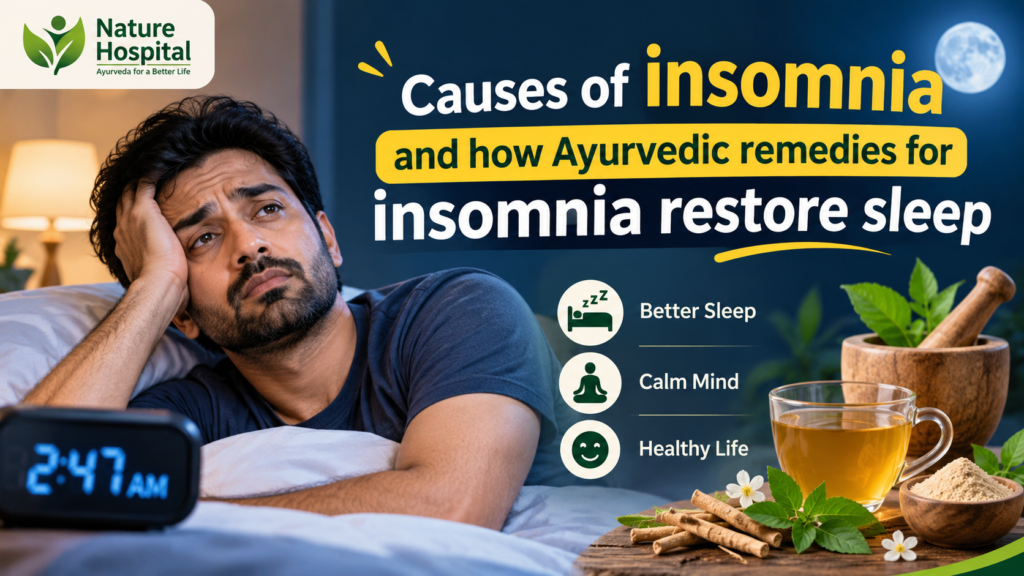
The Ayurvedic View of Insomnia (Anidra)
In Ayurveda, sleeplessness is called Anidra. Nidra (sleep) is described as one of the three upastambhas, or supporting pillars of life, along with ahara (food) and brahmacharya (balanced living). When sleep is disturbed for long, the body and mind lose their balance.
Anidra is mostly associated with aggravated vata dosha, which makes the mind restless. Vata is linked with movement, air and the nervous system. When it rises, you may feel anxious, scattered and unable to switch off. Sometimes pitta, which brings heat and irritability, is also involved, and the person wakes between 10 pm and 2 am feeling warm or angry. Kapha imbalance usually causes heavy, excessive sleep, but it can also cause broken sleep when digestion is poor.
A disturbed routine, worry, dryness, fasting, late nights and overstimulation are believed to push vata out of balance. The remedy is a calming, regular and nourishing routine. That is the heart of all Ayurvedic remedies for insomnia: soothe vata, cool pitta where needed, and rebuild a steady rhythm of eating, working and resting.
Vata, Pitta and Kapha Types of Sleep Problems
- Vata type: difficulty falling asleep, racing thoughts, light and broken sleep, dry skin, constipation. Warm, oily, grounding Ayurvedic remedies for insomnia help most.
- Pitta type: waking in the middle of the night, feeling hot, irritability, acidity. Cooling foods and calming practices are preferred.
- Kapha type: sleep that is long but not refreshing, heaviness, low energy. Light food and morning activity are advised.
A practitioner decides your dominant imbalance through detailed history and pulse examination (Nadi Parikshan). This is why Ayurvedic remedies for insomnia are most effective when personalised.
10 Proven Ayurvedic Remedies for Insomnia
Here are ten Ayurvedic remedies for insomnia that are widely recommended in traditional practice. Start with two or three, follow them for a few weeks, and add more gradually. These remedies support better sleep habits, but they do not replace medical treatment where it is needed.
1. Fix Your Sleep Routine (Dinacharya)
The first of all Ayurvedic remedies for insomnia is a fixed daily routine. Sleep and wake up at the same time every day, ideally sleeping by 10 to 10:30 pm. Ayurveda says the period after 10 pm is ruled by pitta, and if you stay awake through it you may get a “second wind” that makes sleep harder.
Keep the same wake-up time even on holidays. After one or two weeks, the body clock settles and falling asleep becomes easier. This simple step often does more than any medicine.
2. Foot Massage Before Bed (Padabhyanga)
Padabhyanga is a foot massage with a little warm sesame or coconut oil. It is traditionally used to calm vata and promote sleep, and it is one of the easiest Ayurvedic remedies for insomnia to do at home.
Wash your feet with warm water, then massage the soles and toes slowly for 5 to 10 minutes. Wipe off extra oil and wear clean socks so you do not slip. Many people find this routine relaxing, especially when done at the same time every night.
3. Head and Body Oil Massage (Shiroabhyanga and Abhyanga)
Gentle oil massage of the scalp and body is another pillar among Ayurvedic remedies for insomnia. Warm brahmi oil, sesame oil or coconut oil is massaged slowly over the head, neck and shoulders. The slow, rhythmic touch is believed to quieten vata and relax the mind.
Avoid oil massage if you have fever, indigestion, a cold or skin infection. If you have a medical condition, ask your practitioner which oil suits you.
4. Warm Milk at Night
A glass of warm milk at night is one of the most popular home Ayurvedic remedies for insomnia. Some people add a pinch of nutmeg, cardamom or turmeric if it suits their digestion. Milk is considered nourishing and grounding in Ayurveda.
The scientific evidence for warm milk is limited, but many people find the ritual soothing. Avoid it if you are lactose intolerant or if milk causes acidity or bloating. Do not drink it right after a heavy meal.
5. Calming Herbs (Ashwagandha, Brahmi, Jatamansi, Tagara)
Ashwagandha, brahmi, jatamansi and tagara are traditionally used for stress and sleep, and they appear in many classical Ayurvedic remedies for insomnia. Ashwagandha is known as an adaptogen for stress, brahmi supports the mind, jatamansi is used for calming, and tagara is traditionally used for restlessness.
The scientific evidence is mixed, and herbs may interact with other medicines or may not suit everyone. Pregnant women, people with thyroid problems, autoimmune conditions or those on sedatives, blood pressure or diabetes medicines must be especially careful. Use these herbs only after consulting a qualified practitioner, and do not combine them with sleeping pills on your own.
6. Slow Breathing (Pranayama)
Breathing practice is among the safest Ayurvedic remedies for insomnia. Bhramari (humming bee breath) and Anulom Vilom (alternate nostril breathing) calm the nervous system and slow the heart rate.
- Bhramari: sit comfortably, close your eyes, inhale slowly and hum softly as you exhale. Repeat for 5 to 7 rounds.
- Anulom Vilom: inhale through the left nostril, exhale through the right, then reverse. Keep the breath gentle and smooth for 5 to 10 minutes.
Practise in the evening or just before bed. Never force or hold the breath if you feel dizzy.
7. Gentle Yoga and Yoga Nidra
Gentle stretches and relaxation poses prepare the body for rest. Balasana (child’s pose), Viparita Karani (legs up the wall), Setu Bandhasana (bridge pose) and Shavasana (corpse pose) are common choices in routines built on Ayurvedic remedies for insomnia.
Yoga Nidra, a guided relaxation done lying down, helps many people who cannot “switch off”. Even 10 to 20 minutes can reduce tension. Avoid vigorous exercise within two hours of bedtime.
8. Create a Sleep-Friendly Bedroom and Digital Detox
Switch off screens at least 30 to 60 minutes before bed. Blue light and constant notifications keep the brain alert. Among all Ayurvedic remedies for insomnia, this is the one most people find hardest, but it often gives the fastest improvement.
Keep the room dark, quiet and cool, and use the bed only for sleep. Keep the phone away from the pillow. If noise is a problem, soft earplugs or a fan can help.
9. Light, Early, Warm Dinner
Eat dinner 2 to 3 hours before bedtime and keep it light and warm. Khichdi, vegetable soup, moong dal or cooked vegetables with roti are easy to digest. Heavy, fried or very spicy food at night can cause acidity and disturb sleep.
Ayurveda teaches that good digestion is the base of good sleep. That is why diet corrections form such a large part of Ayurvedic remedies for insomnia.
10. Manage Stress and Quiet the Mind
Worry is the commonest reason for sleeplessness. Write down your worries or to-do list earlier in the evening so your mind is less busy at night. Spend a few minutes in meditation, prayer or quiet sitting. Gratitude journalling and light reading (not on a screen) also help.
If anxiety is strong, combine these Ayurvedic remedies for insomnia with professional support. You can read our guide to Ayurvedic remedies for anxiety and stress for more help.
Ayurvedic Therapies Used for Insomnia (Panchakarma)
Apart from home care, clinics use specific therapies as part of Ayurvedic remedies for insomnia. These are done under supervision and chosen after a full assessment.
- Shirodhara: a continuous stream of warm oil, milk or medicated liquid poured over the forehead. It is used traditionally for stress and sleeplessness.
- Shiro Abhyanga: a therapeutic head massage with medicated oils.
- Abhyanga: a full-body oil massage that soothes vata.
- Nasya: application of medicated oil drops in the nostrils, used for head and neck-related conditions.
- Basti: medicated enema therapy, considered the main treatment for vata disorders in classical texts, used only under expert care.
Not everyone needs these therapies. Many people improve with routine, diet and medicine alone. Your doctor will suggest the right mix of Ayurvedic remedies for insomnia after examining you.
Ayurvedic Herbs for Sleep: What Each One Is Traditionally Used For
Herbs are a major part of classical care, but they must be matched to the person. Here is a short guide to the herbs most often discussed.
- Ashwagandha: traditionally used for stress, weakness and low stamina. It is considered nourishing and is often chosen when tiredness and anxiety go together.
- Brahmi: used for the mind, memory and calmness. It is often taken as a preparation or used in oil for head massage.
- Jatamansi: a calming herb traditionally used for restlessness and disturbed sleep.
- Tagara: used in Ayurveda for sleeplessness and nervous tension.
- Shankhpushpi: traditionally used to support the mind and reduce mental fatigue.
- Nutmeg (jaiphal): used in tiny pinches with milk, but large amounts are unsafe and can cause side effects.
Doses, forms (powder, tablet, decoction or oil) and duration differ for every person. Self-medication can cause problems, which is why guided use is always better than buying random products online.
What Happens During Shirodhara?
Shirodhara is one of the best known clinic therapies. The patient lies comfortably on a table while a thin, steady stream of warm medicated oil or liquid is poured over the forehead for about 30 to 45 minutes. The slow rhythm and warmth help many people feel deeply relaxed, and some fall asleep during the session.
It is usually given as a course over several days, together with diet and medicines. It is not suitable for everyone, so a doctor should examine you first. People with fever, cold, sinus congestion or certain scalp problems may be advised to wait.
Keep a Sleep Diary to Track Your Progress
A sleep diary shows patterns that are hard to notice otherwise. For two weeks, note the time you went to bed, how long you took to fall asleep, how many times you woke up, what you ate and drank in the evening, and how you felt next morning. Bring this to your doctor.
You may notice that sleep is worse after late dinners, caffeine or long screen use. Such patterns tell you which changes will help the most, and make your chosen Ayurvedic remedies for insomnia more targeted.
Creating the Right Sleep Environment
- Keep room temperature comfortable and cool, with good ventilation.
- Use a comfortable mattress and pillow that supports your neck.
- Block light with curtains and remove glowing devices.
- Keep clocks out of sight so you do not keep checking the time.
- Use soft, calming sounds or silence rather than TV.
- Keep the bedroom tidy and free from work material.
Diet for Better Sleep: Foods to Eat and Avoid
Food and sleep are closely linked in Ayurveda. A balanced diet is a core part of Ayurvedic remedies for insomnia.
Foods That May Help You Sleep
- Warm milk with a pinch of nutmeg or turmeric, if it suits your digestion.
- Cooked, warm, lightly spiced meals such as khichdi, dal and soups.
- Seasonal fruits such as banana or papaya in the evening, if they suit you.
- Almonds and walnuts in small quantity.
- Herbal teas such as chamomile, or a light cumin-fennel-coriander tea.
- Ghee in small amounts, which is considered nourishing for vata.
Foods and Drinks to Avoid
- Tea, coffee and cola after the afternoon.
- Alcohol. It may make you drowsy but disturbs deep sleep.
- Spicy, oily and fried food at night, which can cause acidity.
- Very late dinners and heavy meals before bed.
- Cold, raw and dry foods in the evening if you have a vata-type imbalance.
- Smoking and tobacco, which are stimulants.
Drink enough water through the day but reduce large amounts just before bed, so you do not wake up repeatedly. Following these food rules makes all other Ayurvedic remedies for insomnia more effective.
A Sample Daily Routine Using Ayurvedic Remedies for Insomnia
Here is a simple routine you can adapt. It shows how different Ayurvedic remedies for insomnia fit into one day.
- 6:00 to 6:30 am: wake up at the same time daily, drink warm water, and get morning sunlight.
- 7:00 am: yoga or a brisk walk for at least 30 minutes.
- 8:30 am: a warm, nourishing breakfast.
- 1:00 pm: the main meal of the day. Keep any nap short (under 30 minutes) or avoid it.
- After 2:00 pm: no tea, coffee or cola.
- 7:00 pm: light, warm dinner, 2 to 3 hours before bed.
- 8:30 pm: write down worries and tomorrow’s to-do list.
- 9:15 pm: switch off screens, take a warm bath or wash your feet.
- 9:30 pm: Padabhyanga, then 5 to 10 minutes of Bhramari or Anulom Vilom.
- 10:00 pm: warm milk if it suits you, then lights off.
Follow this routine for at least three to four weeks before judging the results. Ayurvedic remedies for insomnia work gradually, because they correct habits and not just symptoms.
Ayurvedic Remedies for Insomnia Caused by Stress and Anxiety
When sleeplessness comes from worry, the mind keeps replaying thoughts at bedtime. Ayurvedic remedies for insomnia caused by stress focus on calming the mind (manas) and nourishing the nervous system.
Useful steps include evening pranayama, scalp massage, Yoga Nidra, regular meals and limiting news and social media at night. A practitioner may also advise brahmi, ashwagandha or other herbs after assessment. If you feel persistently sad, hopeless or panicky, do not treat it as only a sleep issue. Please speak to a doctor or counsellor. Our mental wellbeing treatment page explains how we approach stress and mind-related problems.
Daytime Habits That Support Ayurvedic Remedies for Insomnia
Sleep at night is built during the day. These daytime habits make every bedtime remedy work better:
- Get morning sunlight and exercise for at least 30 minutes daily, but not right before bed.
- Keep daytime naps short (under 30 minutes) or avoid them if they affect your night sleep.
- Eat meals at regular times and do not skip breakfast or lunch.
- Take short breaks from screens and work to reduce mental tension.
- Spend time with family and friends. Loneliness and stress worsen sleep.
- Limit caffeine to the morning hours.
Dos and Don’ts for Better Sleep
Do
- Follow the same sleep and wake time every day.
- Use calming Ayurvedic remedies for insomnia such as Padabhyanga and pranayama.
- Keep your bedroom dark, quiet and cool.
- Eat light and early at night.
- Seek help early if sleeplessness continues.
Don’t
- Do not use mobile or TV in bed.
- Do not take sleeping pills regularly without medical advice.
- Do not start herbal supplements on your own, especially with other medicines.
- Do not lie in bed worrying for hours. Get up, do something calming in dim light and return when sleepy.
- Do not drink alcohol to fall asleep.
Precautions While Using Ayurvedic Remedies for Insomnia
Natural does not always mean safe for everyone. Keep these points in mind while using Ayurvedic remedies for insomnia:
- Tell your doctor about all herbs and medicines you take, including sleeping pills, thyroid, diabetes and blood pressure tablets.
- Pregnant and breastfeeding women should use herbs only under medical supervision.
- Children and elderly people need doctor-guided doses.
- Buy herbal products only from trusted sources. Poor quality products can be contaminated.
- Stop and consult a doctor if you notice rashes, stomach upset, palpitations or unusual drowsiness.
- Never stop a prescribed medicine suddenly because you started a herbal remedy.
How Long Do Ayurvedic Remedies for Insomnia Take to Work?
This depends on the cause, your age, lifestyle and how regularly you follow the plan. Some people feel calmer within a week of fixing their routine and using simple measures such as foot massage and breathing practice. Others, especially with long-standing or stress-related insomnia, may need several weeks or months of combined care.
Ayurvedic remedies for insomnia are not instant sedatives. They work by correcting digestion, stress and routine. Consistency matters more than quantity, so follow the plan every day and review your progress with your doctor.
Understanding Nidra: Types of Sleep in Ayurveda
Classical Ayurvedic texts describe several kinds of sleep. Tamasi sleep is heavy and dull, linked with excess tamas and laziness. Svabhaviki sleep is natural sleep that comes at the right time and refreshes the person. Vaikariki sleep is disturbed sleep that comes from illness or imbalance. Knowing this classification explains why a person can spend eight hours in bed and still wake up tired.
The goal of treatment is to bring back natural, refreshing sleep. Correct food, regular timing, a calm mind and a balanced body are all needed. When you follow Ayurvedic remedies for insomnia with this goal in mind, you stop chasing “more hours” and start improving the quality of your rest.
Ayurvedic Remedies for Insomnia in Different Groups of People
Sleep problems look different at different stages of life. The same plan does not suit everyone, so adapt the basics to your situation.
Working Professionals and Shift Workers
Long hours, deadlines and night shifts disturb the body clock. Try to keep a fixed sleep window even on shift days, use dark curtains or an eye mask for daytime sleep, avoid caffeine in the second half of your shift, and have a light, warm meal before sleeping. Padabhyanga and slow breathing after returning home help the mind unwind.
Students
Exam stress, late-night study and heavy mobile use are common triggers. Students should finish difficult study early in the evening, take short breaks, avoid energy drinks and sleep at a regular hour. Brahmi-based preparations are traditionally used for memory and calm, but should be taken only under guidance.
Women, Pregnancy and Menopause
Hormonal changes can disturb sleep in pregnancy, after childbirth and around menopause. During pregnancy and breastfeeding, never start herbs without medical advice. Gentle routine changes, light dinners, relaxation and doctor-guided care are safer. Hot flushes and night sweats at menopause may need a separate evaluation.
Elderly People
Sleep naturally becomes lighter with age, and pain, frequent urination and medicines can break it further. Morning sunlight, a short walk, early dinner and limited evening fluids help. Any herb or therapy must be chosen carefully because of other illnesses and medicines.
Common Myths About Insomnia and Ayurvedic Treatment
- Myth: Everyone needs exactly eight hours. Fact: Most adults need 7 to 9 hours, but needs vary slightly from person to person.
- Myth: Alcohol helps you sleep. Fact: It may make you drowsy but it disturbs deep sleep and often causes early waking.
- Myth: Herbal means harmless. Fact: Herbs can interact with medicines and may not suit everyone.
- Myth: A long weekend sleep-in fixes lost sleep. Fact: Irregular timings confuse the body clock and can worsen insomnia.
- Myth: Ayurveda works overnight. Fact: Ayurvedic remedies for insomnia need steady practice over weeks.
A Simple 7-Day Plan to Start
If you feel overwhelmed, begin with this one-week plan. It adds one habit at a time so that it is easy to continue.
- Day 1: choose a fixed bedtime and wake-up time and write them down.
- Day 2: stop tea and coffee after 2 pm.
- Day 3: shift dinner at least two hours before bed and keep it light.
- Day 4: switch off screens 45 minutes before sleeping.
- Day 5: add Padabhyanga with warm oil for 5 to 10 minutes.
- Day 6: add Bhramari or Anulom Vilom breathing for 5 to 10 minutes.
- Day 7: review how you feel and continue the habits that helped most.
After the first week, keep going for at least three more weeks. If there is little change, book a consultation so a practitioner can look for deeper causes and suggest suitable medicines.
Why Sleep Matters So Much for Health
Sleep is when the body repairs tissues, balances hormones and sorts memories. Poor sleep over a long time is linked with low immunity, weight gain, high blood pressure, low mood, poor focus and reduced work performance. Ayurveda has always stressed this link between sleep, digestion and strength.
That is why people do not treat sleeplessness as a small problem. Using Ayurvedic remedies for insomnia early, before the habit becomes chronic, makes recovery easier and protects overall health.
When to See a Doctor
Consult a doctor if sleep problems last more than a few weeks, you feel very sleepy during the day, you snore loudly or stop breathing in sleep, or you feel sad, hopeless or anxious. These can signal sleep apnoea, thyroid disease, depression or other conditions that need proper evaluation, and Ayurvedic remedies for insomnia alone may not be enough.
Seek urgent help if you have thoughts of harming yourself. Poor sleep and stress can also affect hormonal and sexual health, including issues like those discussed in our guide on nightfall.
Frequently Asked Questions (FAQ)
What are the best Ayurvedic remedies for insomnia?
The most commonly recommended Ayurvedic remedies for insomnia are a fixed sleep routine, Padabhyanga (foot massage), warm milk, pranayama, Yoga Nidra, a light early dinner and, under guidance, herbs such as ashwagandha, brahmi and jatamansi.
How many hours of sleep do adults need?
Most adults need about 7 to 9 hours of sleep a night.
Is warm milk really good for sleep?
It is a popular traditional remedy and many people find it soothing, though the scientific evidence is limited. It is generally safe unless you are lactose intolerant.
Can Ayurveda treat insomnia permanently?
Ayurveda focuses on correcting routine, stress and digestion, which are common causes. Results vary, and some cases need additional medical evaluation. Ayurvedic remedies for insomnia are most helpful when you follow them consistently.
Which herb is best for sleep in Ayurveda?
Ashwagandha, brahmi, jatamansi and tagara are the herbs most often mentioned. The right one depends on your body type and the cause of your sleeplessness, so take them only after consulting a qualified practitioner.
Is it okay to take sleeping pills regularly?
Sleeping pills should be used only on a doctor’s advice and for a short time, because of the risk of dependence and side effects.
What should I do if I wake up at 3 am?
Avoid checking your phone, try slow breathing, and if you cannot sleep after about 20 minutes, get up and do something calming in dim light until you feel sleepy.
Can I use Ayurvedic remedies for insomnia along with allopathic medicines?
Sometimes yes, but you must inform both your Ayurvedic practitioner and your doctor. Some herbs may interact with other medicines, so do not combine them on your own.
Are Ayurvedic remedies for insomnia safe for the elderly?
Many lifestyle measures such as routine, light dinner and gentle breathing are safe. For herbs and therapies, the elderly need a doctor-guided plan because of other illnesses and medicines.
Does yoga help with insomnia?
Gentle yoga, Yoga Nidra and relaxation poses may reduce stress and prepare the body for sleep. Avoid intense workouts right before bedtime.
Can screen time really cause insomnia?
Yes. Late-night screen use keeps the brain stimulated and delays sleep. Switching off screens 30 to 60 minutes before bed is one of the simplest Ayurvedic remedies for insomnia.
Can I take ashwagandha every night for sleep?
Some people use it nightly under guidance, but it is not right for everyone. People with thyroid disease, autoimmune conditions, pregnancy or those on sedatives should ask a doctor first.
Does Padabhyanga really help with sleep?
It is a traditional practice used to calm vata. Many people find the warmth and slow touch relaxing, though scientific studies are limited.
How long should I follow the plan before seeing results?
Give simple routine changes at least three to four weeks. If there is no improvement, or if symptoms are severe, consult a doctor for a full evaluation.
Is a daytime nap allowed if I have insomnia?
Short naps under 30 minutes are usually fine, but long or late naps can reduce your sleep drive at night. Avoid them if you struggle to fall asleep.
Can children use Ayurvedic remedies for insomnia?
Children should follow routine, screen limits and a calm bedtime. Herbal medicines for children must be prescribed by a qualified doctor.
Consult Dr. Bhisham Tiwari at Nature Hospital, Hisar
If you are dealing with sleep problems, you do not have to manage it alone. At Nature Hospital, Dr. Bhisham Tiwari (Ayurvedacharya) offers confidential consultations in the clinic and online. After a detailed assessment, including Nadi Parikshan, a personalised plan covering medicines, diet, lifestyle and suitable Ayurvedic remedies for insomnia is suggested.
Learn more about our mental wellbeing treatment or book a consultation. The online consultation fee is ₹200 and is adjustable against a complete treatment package.
- Address: 32, Rama Complex, Parijat Chowk, Hisar, Haryana 125001
- Phone / WhatsApp: +91 98126 95495
- Timings: Monday to Saturday, 9:00 am to 7:00 pm (Sunday closed)
Conclusion
Good sleep is not a luxury. It is the base of health, mood and energy. The Ayurvedic remedies for insomnia described above, from a fixed routine and Padabhyanga to pranayama, a light dinner and guided herbal care, aim to calm vata, balance digestion and quieten the mind. Start with small steps, stay consistent for a few weeks, and take medical advice if the problem continues. With patience and the right guidance, Ayurvedic remedies for insomnia can help you return to deep, refreshing sleep.
Disclaimer: This article is for general information and education only. It is not a substitute for professional medical advice, diagnosis or treatment. Always consult a qualified doctor for your specific condition, and do not stop or change any prescribed medicine without medical advice. Individual results may vary.