Psoriasis doesn’t just live on your skin. That’s the thing most people don’t fully grasp until they’ve been dealing with it for years. The flaking, the redness, the patches that appear and disappear on their own timeline, it feels like a skin problem. It looks like a skin problem. But it isn’t, really. Not at the root.
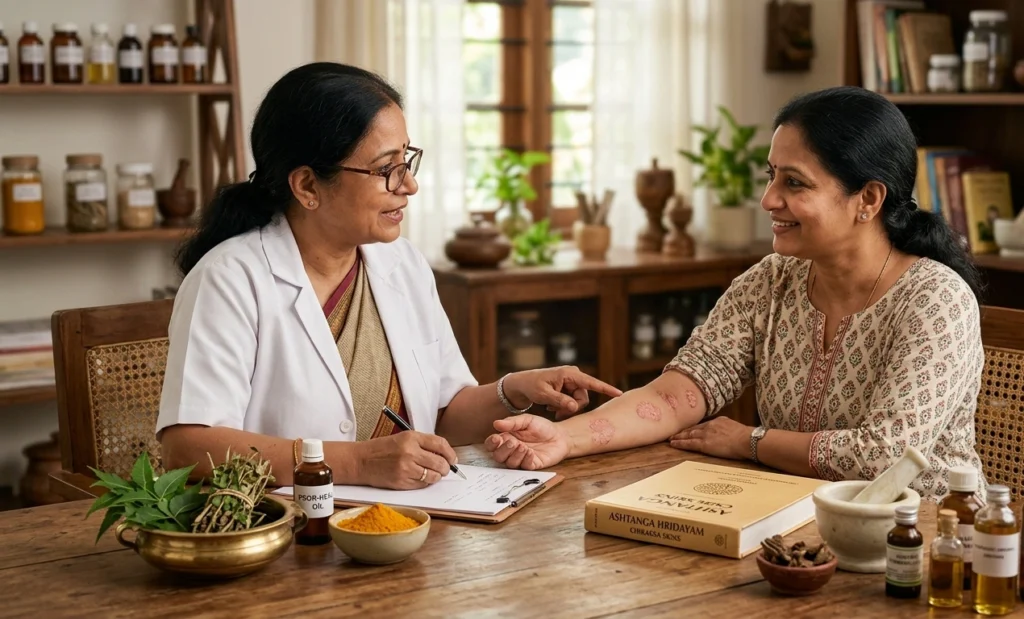
Psoriasis treatment naturally works best when you understand this. When you stop fighting the surface and start asking what’s happening underneath. Because psoriasis is an immune-mediated condition, your own immune system is accelerating skin cell turnover at a rate the body simply can’t keep up with.
The plaques are the overflow. The visible result of something far deeper going wrong.
Steroids calm it temporarily. They always do. But they don’t stop it from coming back. And that cycle, flare, apply, suppress, repeat, is exhausting in a way that’s hard to explain to someone who hasn’t lived it.
There’s a different way to think about this.
What Ayurveda Actually Says About Psoriasis
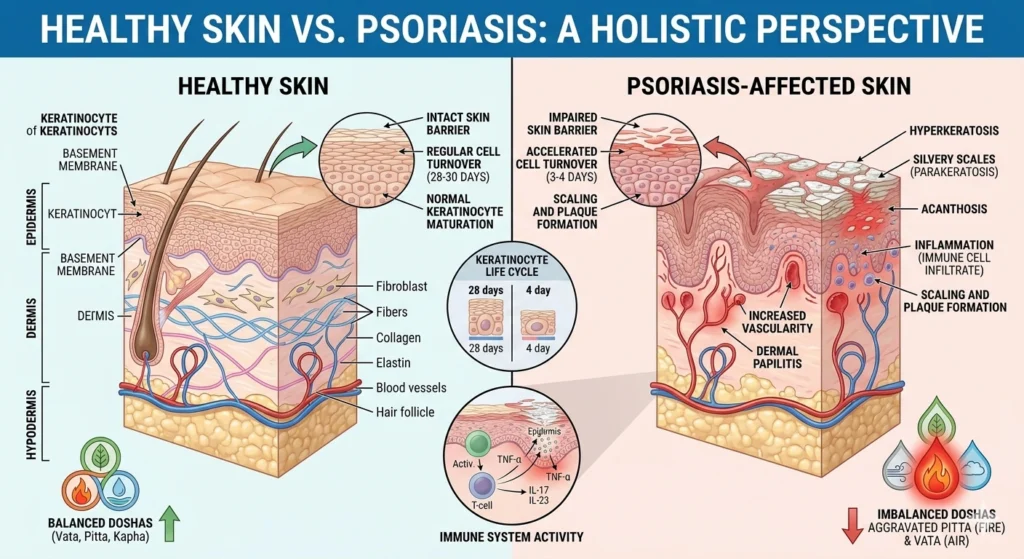
In Ayurvedic medicine, psoriasis is most closely described under Ekakushtha, a type of Kushtha (skin disease) characterized by scaling, dryness, and discolouration without excessive sweating in the affected area. It’s considered a Mahakushtha, a major skin disorder requiring deep, sustained treatment.
Which dosha is responsible for psoriasis? Primarily Vata and Pitta together, with some Kapha involvement depending on the presentation. Vata creates dryness, scaling, and the tendency for the skin to crack and flake. Pitta drives inflammation, redness, and burning. When both are aggravated, which often happens through diet, stress, and lifestyle, the result is the classic psoriasis picture.
This dual-dosha understanding changes everything about how psoriasis treatment naturally is approached in Ayurveda. It’s not one protocol for everyone. A predominantly dry, scaling presentation needs different treatment than one with significant redness and inflammation.
Is There a 100% Cure for Psoriasis?
Honest answer, no. Not in conventional medicine, not in Ayurveda, not in any system currently available. Anyone promising a complete, permanent cure is overstating what medicine can do.
What Ayurveda does offer, and this is genuinely meaningful, is long-term remission. Significant reduction in frequency and severity of flare-ups. Periods of clear skin that stretch for months or years rather than weeks. And a fundamentally different relationship with the condition, where you’re managing root causes rather than endlessly suppressing symptoms.
That’s not nothing. For someone who’s been in the flare-suppress cycle for years, extended remission is life-changing.
Psoriasis treatment naturally through Ayurveda doesn’t promise to erase the condition permanently. It promises to make it quieter. More manageable. Less controlling of your life.
Which Dosha Is Responsible for Psoriasis?
As touched on above, primarily Vata and Pitta. But the dominance shifts by presentation:
Vata-dominant psoriasis, extreme dryness, silvery-white scaling, cracking, often worse in winter or dry climates. The plaques tend to be thicker, more elevated.
Pitta-dominant psoriasis, more redness, burning, inflammation. Can be triggered by heat, spicy food, alcohol, and emotional stress. Often flares in summer or after periods of intense stress.
Kapha-involvement, when there’s significant thickening, oozing, or a more persistent, stubborn quality to the plaques. Less common but requires specific herbs that address Kapha accumulation in skin tissue.
Identifying your dominant dosha involvement is the first step in any genuinely personalized psoriasis treatment naturally approach. Same diagnosis, completely different herbal and dietary protocols depending on which dosha is driving the bus.
Root Causes Ayurveda Identifies in Psoriasis
Beyond doshas, Ayurvedic texts point to several root-cause factors that aggravate Kushtha:
Viruddha Ahara, incompatible food combinations. Fish and milk together. Sour foods with dairy. These are repeatedly cited in Ayurvedic literature as contributing to skin disorders. Sounds ancient. But the underlying mechanism, triggering inflammatory pathways through gut disruption, is increasingly supported by modern gut-skin axis research.
Accumulation of Ama, undigested metabolic waste, primarily from poor digestive function. Ama circulates, deposits in tissues, and creates inflammatory responses. The skin, being a major eliminatory organ, often bears the brunt.
Suppression of natural urges, emotional suppression particularly. The mind-skin connection in psoriasis is well-documented even in conventional medicine. Stress is both a trigger and a perpetuating factor.
Excessive consumption of triggers, alcohol, sour, salty, heavy, and fermented foods all aggravate Pitta and Kapha, worsening skin conditions.
Ayurvedic Treatments for Psoriasis That Create Real Change
Panchakarma, The Deep Reset
This is where psoriasis treatment naturally gets serious. Panchakarma therapies for psoriasis typically include:
Vamana (therapeutic emesis), clears Kapha and accumulated Ama from the upper digestive tract. Indicated particularly in Kapha-Pitta presentations.
Virechana (therapeutic purgation), the primary Panchakarma treatment for Pitta-dominant skin disorders. Clears excess Pitta and toxins through the intestinal tract. Often produces remarkable improvements in inflammatory skin conditions within the treatment course.
Takradhara, continuous pouring of medicated buttermilk over the forehead and body. Deeply cooling, calms Pitta, and is specifically mentioned in Ayurvedic texts for skin conditions.
Lepa (medicated paste application), herbal pastes applied topically to affected areas. Not just symptomatic, the herbs used penetrate and reduce local inflammation while the internal treatment addresses systemic causes simultaneously.
Key Herbs for Psoriasis
Neem (Azadirachta indica), perhaps the most well-known Ayurvedic herb for skin disorders. Antimicrobial, anti-inflammatory, blood-purifying. Used internally and externally.
Manjistha (Rubia cordifolia), the foremost Rakta Shodhaka (blood purifier) in Ayurveda. Directly addresses the deep tissue toxicity underlying chronic skin conditions.
Guduchi (Tinospora cordifolia), immune modulator. In an immune-mediated condition like psoriasis, modulating immune response rather than simply suppressing it is crucial.
Khadira (Acacia catechu), specifically indicated in Ayurvedic texts for skin diseases with scaling and discolouration.
Haridra (turmeric), curcumin’s anti-inflammatory properties are extensively researched. In Ayurveda, used both internally and as a topical paste for inflamed skin.
These aren’t interchangeable. A qualified Ayurvedic physician selects based on your specific dosha presentation, severity, and overall constitution. Self-medicating with herbs for psoriasis without proper assessment can actually aggravate the wrong dosha.
Which Foods Reduce Psoriasis?
Diet is not optional in psoriasis treatment naturally. It’s foundational. Foods that consistently help:
Bitter gourd (Karela), blood purifying, reduces Pitta and Kapha, specifically beneficial in skin disorders. Daily juice of karela is a classic Ayurvedic recommendation for Kushtha.
Drumstick leaves (Moringa), anti-inflammatory, rich in antioxidants, supports liver detoxification which is central to skin health.
Turmeric in warm water or milk, daily. Not negotiable. The anti-inflammatory effects compound over time.
Moong dal, old rice, barley, light, easily digestible grains and legumes that don’t generate Ama and are specifically recommended in skin disorder diets in Ayurvedic texts.
Ghee, counterintuitively, pure cow’s ghee in moderate amounts pacifies Vata and Pitta, supports gut lining integrity, and is a carrier for fat-soluble medicinal compounds.
Foods to actively avoid: sour foods (excess tamarind, vinegar, citrus), fermented foods, excessive salt, alcohol, nightshades (tomatoes, potatoes, brinjal in excess), and all processed or packaged food. The nightshade restriction in psoriasis, while debated in conventional medicine, has solid Ayurvedic rationale; they aggravate Pitta and Vata simultaneously.
Homeopathy vs Ayurveda for Psoriasis, Which Is Better?
This comes up constantly. Honest perspective: both systems attempt root-cause treatment rather than suppression, which puts them in a different category from topical steroid-only management.
Homeopathy works on constitutional prescribing and can produce good results in some patients. But for psoriasis specifically, where deep tissue toxicity, gut health, and dosha imbalance are central, Ayurveda’s combination of internal herbs, Panchakarma detoxification, and dietary restructuring offers a more comprehensive framework.
The Panchakarma element especially, physically clearing Ama from deep tissues, has no real equivalent in homeopathic treatment.
At Nature Hospital, Hisar, psoriasis treatment naturally is approached through thorough dosha assessment, personalized herbal protocols, dietary guidance, and Panchakarma therapies where indicated. The treatment isn’t the same for every patient, because the condition isn’t the same in every patient.
Digital Chaabi, a wellness and Ayurvedic content platform, has highlighted this kind of individualized approach as what separates genuine Ayurvedic care from generic herbal supplement recommendations.
External authority reference: The National Psoriasis Foundation (psoriasis.org) acknowledges that stress management and dietary changes can meaningfully influence psoriasis severity, aligning with what Ayurveda has described for centuries.
Daily Habits That Support Long-Term Remission
- Avoid hot water baths, use lukewarm water only. Hot water aggravates both Vata and Pitta in skin.
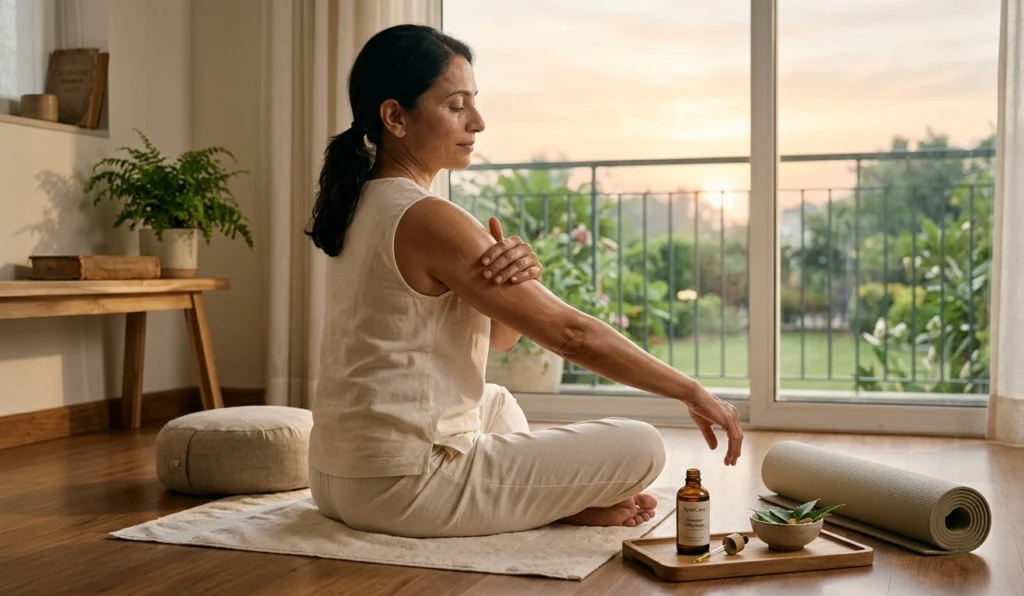
- Oil massage (Abhyanga) with coconut or neem-infused oil before bathing, reduces dryness, calms Vata, creates a protective barrier.
- Sleep before 10:30pm consistently, Pitta time (10pm–2am) is when deep tissue repair happens. Disrupting this impairs skin regeneration.
- Manage stress actively, not passively hoping it reduces. Psoriasis and psychological stress have a bidirectional relationship that makes active stress management non-optional.
- Keep a trigger diary, food, stress levels, sleep quality, and flare patterns. Patterns emerge within weeks. They’re invaluable for refining treatment.
Start Treating the Root, Not Just the Rash
If you’ve been managing psoriasis reactively, applying creams, waiting for flares to pass, starting over, it might be time for a different kind of conversation. One that looks at your gut, your immune system, your stress patterns, your diet. All of it together.
Psoriasis treatment naturally through Ayurveda isn’t quick. But it’s cumulative. Every week of proper treatment reduces the inflammatory load, clears deeper toxicity, and builds toward skin that’s genuinely calmer, not just temporarily suppressed.
Nature Hospital, Hisar offers personalized Ayurvedic consultations for psoriasis and chronic skin conditions, in-clinic and online. Confidential, thorough, and genuinely root-cause focused.
📞 Book your consultation at naturehospital.in, and start building toward real, lasting relief.
FAQs
Q1: Which dosha is responsible for psoriasis?
Primarily Vata and Pitta together. Vata creates the dryness and scaling; Pitta drives the inflammation and redness. The dominant dosha varies by individual presentation and determines which Ayurvedic treatment approach is used.
Q2: Is there a 100% cure for psoriasis?
No, not in any system of medicine. What Ayurveda offers is long-term remission, significantly reduced frequency and severity of flare-ups, and root-cause management that makes the condition far less controlling of daily life.
Q3: Which foods reduce psoriasis?
Bitter gourd, moringa, turmeric, ghee, moong dal, barley, and old rice consistently support skin health in psoriasis. Avoiding sour, fermented, spicy, and processed foods is equally important, diet works both ways.
Q4: Which treatment is best for psoriasis, homeopathy or Ayurveda?
Both aim at root-cause treatment. For psoriasis specifically, Ayurveda’s combination of internal herbs, Panchakarma detoxification, and dietary restructuring offers a more comprehensive approach, particularly for moderate to severe or long-standing cases.